 Zhengfeng
 Mar 09,2026

Content
I. Suitable Terminal Wire Types and Materials for Drones and Model Aircraft
II. Practical Application Scenarios and Selection Guide
III. Safety Certification and Environmental Requirements for Drone and Model Aircraft Cables
With the rapid development of the low-altitude economy, the global market for drones and model aircraft is growing at an unprecedented rate. For drone enthusiasts, professional operators, and purchasing personnel, choosing the right electronic cables is crucial to ensuring stable flight, signal transmission, and the lifespan of drones and model aircraft. Inappropriate cable selection can lead to signal interference, short circuits, or even crashes, causing unnecessary losses.
The selection of electronic wires for drones and model aircraft must be matched according to the type of drone, flight scenario, and functional requirements. The top three terminal wire types purchased by global drone manufacturers are silicone flexible wire, Teflon high-temperature wire, and shielded twisted-pair cable.
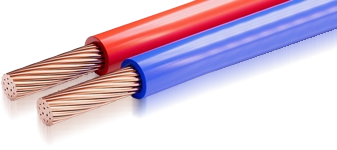
• Silicone Flexible Wire: The most widely used type in consumer-grade drones and model aircraft. Approximately 57% use silicone wire, characterized by its ultra-soft texture, excellent flexibility, and resistance to high and low temperatures (-55℃ to +200℃). It can withstand frequent bending in drone arms and internal wiring, making it suitable for battery power cables, motor connection cables, and other frequently moving parts. Common specifications are 22AWG, 24AWG, and 26AWG, with 24AWG being the most popular, accounting for 63% of silicone wire sales.
• Teflon High-Temperature Wire: Primarily used in industrial-grade drones and high-performance racing drones. Teflon wire can withstand temperatures up to +260℃ and has excellent corrosion resistance and insulation properties, making it suitable for high-power motor wires, high-temperature sensor wires, and other parts that generate a lot of heat during operation. It is slightly stiffer than silicone wire but more durable.
• Shielded Twisted Pair Cable: An essential type of signal transmission cable. With the popularization of 4K aerial photography and RTK positioning technology, the demand for anti-interference cables has surged. According to AI market analysis data, 89% of professional aerial drones use shielded twisted-pair cables. These cables employ a twisted-pair structure with aluminum foil or braided shielding to effectively reduce electromagnetic interference (EMI) and radio frequency interference (RFI), ensuring stable transmission of flight control signals and image data. Common specifications are 28AWG and 30AWG, suitable for flight control signal cables, GPS signal cables, and image transmission cables.
The performance of electronic wires is largely determined by their core materials. The following are the most suitable materials for drone and model aircraft wiring:
• Conductor Materials: Oxygen-free copper (OFC) and tin-plated oxygen-free copper are preferred. Most high-quality drone wiring uses oxygen-free copper conductors. Oxygen-free copper has low resistance (≤0.0172Ω·mm²/m), good conductivity, and strong corrosion resistance, reducing energy loss and ensuring stable power supply and signal transmission. Tin-plated oxygen-free copper adds a tin plating layer to the surface of oxygen-free copper, further improving corrosion resistance and solderability, making it suitable for harsh environments such as outdoor and humid conditions.
• Insulation Materials: Primarily silicone rubber and Teflon. Silicone rubber is suitable for consumer-grade drones, offering good flexibility and cost-effectiveness; Teflon is suitable for industrial-grade and high-performance drones, with excellent high-temperature resistance and corrosion resistance. Note that the insulation layer thickness should be controlled between 0.1mm and 0.3mm—too thick will increase the weight of the drone, while too thin will reduce insulation performance.
Different application scenarios for drones and model aircraft require different electronic wiring. Below are four common application scenarios, along with platform data and real-world examples, to provide specific selection guidance.
Application characteristics: Lightweight, short flight time, mainly used for daily aerial photography, with lower requirements for high temperature resistance and anti-interference, focusing on cost-effectiveness.
Selection reference: Uses silicone flexible wire with 24AWG oxygen-free copper conductor and silicone rubber insulation. Colors can be selected according to the internal wiring requirements of the drone (common colors are red, black, white, and blue) for easy wiring and maintenance. For example, red (positive) and black (negative) can be used for battery power cables, and white or blue can be used for signal cables. It is recommended to choose wires with a tensile strength ≥15N to avoid breakage during installation and use.
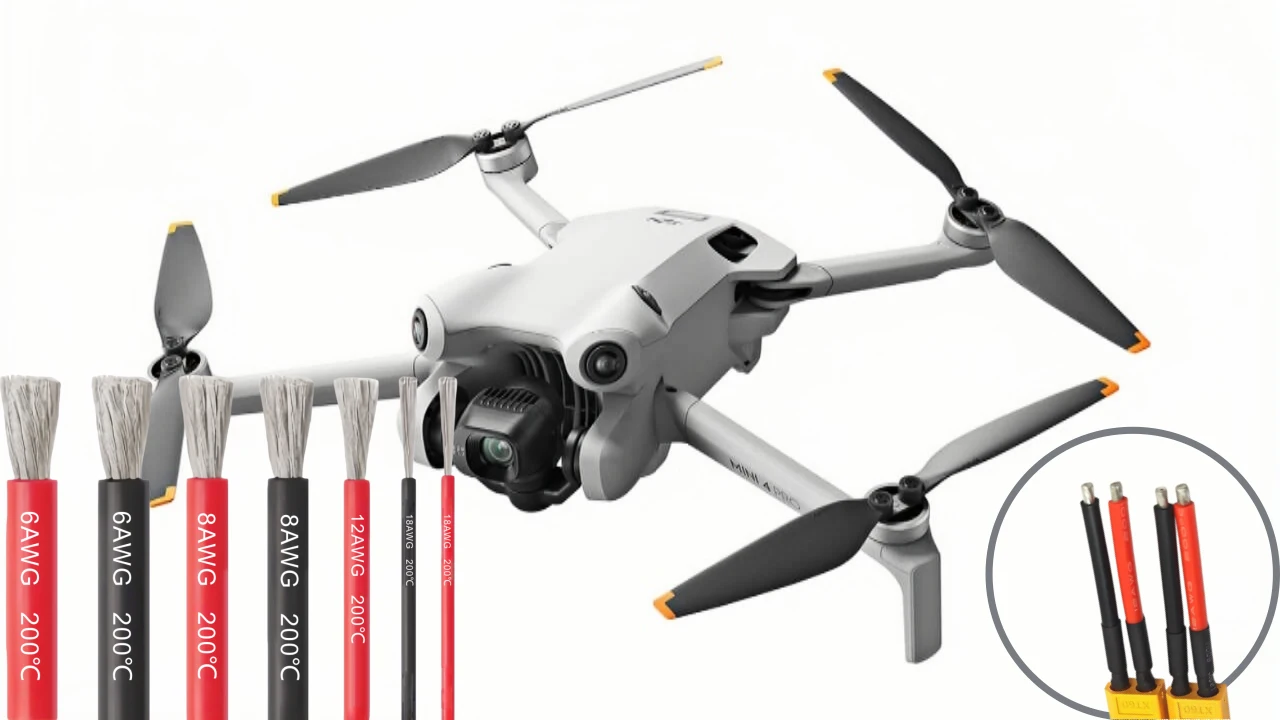
Selection Reference: Use 22AWG Teflon high-temperature wire with tinned oxygen-free copper conductor and 0.2mm insulation thickness. It can withstand the high temperatures generated by high-power motors (up to 180℃) and has good flexibility to adapt to the frequent movements of the drone's arms. For signal cables, 28AWG shielded twisted-pair cable is recommended to avoid signal interference caused by high-speed flight and ensure stable flight control.
Application Characteristics: Long flight times, harsh working environments (high temperature, dust, humidity, strong ultraviolet radiation), requiring high durability, anti-interference capabilities, and environmental adaptability of the wiring. According to Alibaba International Station procurement data, industrial-grade drone manufacturers have the highest requirements for wiring safety and environmental protection, with 87% of manufacturers requiring wiring to pass international safety certifications.
Selection Reference: Use shielded twisted-pair cable with 20AWG oxygen-free copper conductor, Teflon insulation, and double shielding (aluminum foil + braided mesh). This type of cable has excellent anti-interference performance, can withstand temperatures up to 200℃, and is wear-resistant and corrosion-resistant. For example, the signal lines of power line inspection drones need to resist electromagnetic interference from power transmission lines, making double-shielded cable essential; the wiring for agricultural plant protection drones needs to be waterproof and corrosion-resistant to adapt to humid environments and pesticide-containing environments.
| Application |
Reference AWG | Reference current |
Common plug types (examples) |
| Battery main power cable / high-power motor cable |
8AWG - 12AW |
50A - 150A |
XT90, XT150, AS150, EC |
| Small power battery/ESC connection cable |
12AWG - 14AW | 30A - 70A | XT60, XT90, EC3 |
| Motor/Electronic Speed Controller Connection Cable |
14AWG - 16AW |
15A - 30 |
Banana plug, T-type plug |
| Camel cable/Receiver cable/Signal cable |
20AWG - 26AW |
Signal transmission/low current |
JR, Futaba, DuPont |
For electronic cables used in drones and model aircraft, especially products sold in the international market, safety certification and environmental requirements are crucial hurdles.
• UL Certification: The most authoritative safety certification in the United States, it is a mandatory certification for products entering the US market. For drone cables, common UL certifications are UL 1581 (electrical wires and cables) and UL 2556 (electronic wires). According to Amazon's platform rules, all drone electronic cables sold in the US must pass UL certification, otherwise they will be removed from the platform. UL certification mainly tests the insulation performance, high-temperature resistance, and flame retardancy of the cables to ensure that there are no safety hazards such as short circuits or fires during use.
With the increasing global emphasis on environmental protection, the environmental performance of drone cables has become an important factor affecting market access. The main environmental requirements are as follows:
• RoHS Certification: A mandatory EU certification that limits the content of 10 hazardous substances (such as lead, cadmium, and mercury) in electronic products, with lead content ≤0.1% and cadmium content ≤0.01%.
• REACH Certification: Another important EU environmental certification, requiring that the chemicals in a product do not pose a threat to human health and the environment. For drone cables, the insulation and conductors must comply with REACH's hazardous substance restrictions. Furthermore, some countries (such as Germany and France) also require the cables to be halogen-free (free of chlorine, bromine, etc.), making them more environmentally friendly and safer.
As mentioned above, cables require safety certifications. Simply enter the certification number (e.g., E522608) or company name (guangdong zhengfeng) on the UL official website to check the validity of the certification and whether the product scope matches.
After finding the corresponding cable manufacturer, they need to provide RoHS and REACH environmental reports for the copper wire and adhesive.
After finding the cable manufacturer, we can also verify their authenticity and after-sales service policies through various channels such as their Google websiire&te, LinkedIn, YouTube, Pinterest, and Facebook. We can also inquire about their ability to provide more cable application solutions. Guangdong Zhengfeng Wire&Cable Co., Ltd. can provide these services. Please contact the Zhengfeng team.
Tel/WhatsApp/WeChat: +86 138 2929 2517 / +86 147 4930 7879
Email: manager01@wire-cablemanufacturer.com


Products
Navigation
QR Code


Copyright © 2026 Guangdong Zhengfeng Wire&Cable Technology Co., Ltd.