 Zhengfeng
 Feb 25,2026

Content
I. Internal wiring of the robot
II. Robot cabling by scenario: UL cable model compatibility guide
III. Why choose Zhengfeng Wire?
IV. Cable companies contribute to the development of robots
On the stage of the 2026 Chinese Lunar New Year Gala, martial arts robots fluidly performed sword dances, backflips, and nunchaku moves, deeply stunning the audience. From the bionic grandmother in the skit "Grandma's Favorite" who could mimic micro-expressions to the "Wu Bot" showcasing the charm of Chinese martial arts, these robots not only demonstrated the brilliance of Chinese intelligent manufacturing but also sparked curiosity: what supports their agile movements and realistic interactions? Behind every precise joint movement and every smooth reaction of the robot lies a complex internal wiring system—like the robot's "nerves" and "blood vessels," carrying the transmission of power and signals, and providing the core guarantee for the robot's stable operation. As a company deeply rooted in China's cable industry, Guangdong Zhengfeng Cable Technology Co., Ltd. is deeply involved in the research and development and production of robot-specific cables, providing high-quality UL-certified products for the development of the robot industry and helping Chinese intelligent manufacturing move steadily forward.
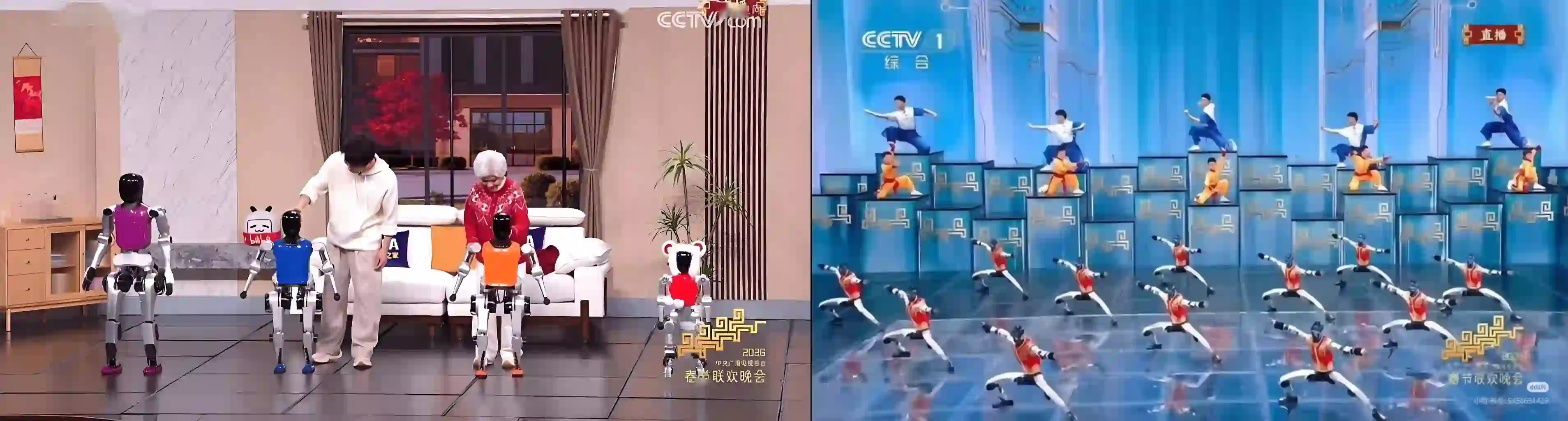
The 2026 Spring Festival Gala has become a grand stage for showcasing humanoid robots in China. According to behind-the-scenes reports, the "Martial Arts Bot" program, inspired by the "kung fu mode" in the 2026 New Year's address, featured 25 robots performing in rotation. These robots required no remote control, relying on precise navigation and stable internal component coordination to move autonomously and demonstrate their skills. The bionic grandmother in "Grandma's Favorite" even perfectly replicated actress Cai Ming's facial features and micro-expressions, boasting 40 degrees of freedom. This required the internal wiring to adapt to frequent small facial muscle movements while ensuring fast and stable signal transmission. These stunning performances relied heavily on high-performance internal wiring—every cable had to withstand repeated bending, twisting, and stretching, ensuring zero signal loss and stable power supply in complex dynamic environments. It is this high standard of wiring that drives the continuous upgrading of robot-specific cables, and UL-certified cables with stringent quality standards have become the preferred choice for high-end robot internal wiring.
For internal wiring in robots, the requirements for cable performance vary drastically depending on the location, space size, motion frequency, power load, and signal transmission needs. Based on practical market applications and UL standards, we have compiled a list of the most commonly used UL cable models and their corresponding application locations to provide a practical reference for robot R&D and manufacturing companies.
Robot joints are the core areas of motion, requiring cables with extremely high flexibility and bending resistance. Robots like "Wu Bot" need to perform frequent, large-angle swinging, rotating, and stretching movements, and their internal cables must withstand millions of bending cycles without breaking or cracking the insulation. For this scenario, UL10064 cable is the ideal choice. This type of cable uses multi-strand tin-plated copper conductors and ETFE insulation, with a rated temperature of 105℃ and a rated voltage of 30V, fully complying with UL758 and UL1581 standards, and passing VW-1 and FT1 vertical burning tests. According to actual test data, 24AWG UL10064 cable can withstand more than 50,000 bends under a 100g load and a 10mm bending radius, while 28AWG and 32AWG specifications can reach more than 500,000 bends, perfectly adapting to the high-frequency movements of robot joints. Furthermore, its small outer diameter (only 0.60mm for 32AWG specification) facilitates arrangement within the narrow space of the joint without affecting the robot's flexibility.
The robot's power supply circuit is responsible for transmitting electrical energy to core components such as motors and drives, requiring cables with excellent current-carrying capacity and insulation performance. The robot's power supply circuit needs to withstand a certain load; a cable failure will directly cause the robot to stop or even be damaged. For this part, the most widely used cables on the market are UL1015 and UL2468. UL1015 cables use PVC insulation and tinned copper conductors, with a rated temperature of 105℃ and a rated voltage of 600V. They possess excellent current-carrying capacity and insulation stability, making them suitable for the robot's main power supply circuit. UL2468 cables, as commonly used flat cables, consist of multiple cores, use PVC insulation and sheathing, with a rated temperature of 80℃ and a rated voltage of 300V. Their flat structure facilitates fixed arrangement within the robot body, saving space, and is suitable for robot branch power supply circuits, such as power connections between the body and limbs.
The robot's signal transmission loop is responsible for transmitting control commands, sensor feedback, and encoder data, requiring extremely high anti-interference performance and signal stability. The facial expression control of the bionic grandma and the motion precision control of the "Wu Bot" both rely on the stable transmission of weak signals. Interference with the signal will cause deviations in robot movements or response delays. For this scenario, UL2464 and UL3135 cables are the preferred choices. UL2464 cables are shielded cables with a tinned copper braided shield, effectively resisting electromagnetic interference (EMI) and radio frequency interference (RFI), ensuring the integrity of signal transmission, and are suitable for signal connections between robot controllers and sensors. UL3135 cables are silicone-insulated cables with a rated temperature of 200℃, possessing excellent high-temperature resistance and flexibility, suitable for signal lines in high-temperature areas inside the robot, such as signal connections near motors, and can withstand the high temperatures generated by long-term motor operation, ensuring stable signal transmission.
For high-temperature areas inside robots, such as motors and drives, cables with high-temperature resistance are required. UL1332 cables use PTFE insulation and tinned copper conductors, with a rated temperature of 200℃. They have excellent high-temperature resistance and corrosion resistance, and can work stably for a long time in high-temperature environments, making them suitable for wiring near high-temperature components of robots. For narrow and complex wiring areas inside robots, UL1007 cables have a small outer diameter and are lightweight, making them easy to route and suitable for auxiliary wiring inside robots, such as connections between small components.

Facing the diverse and high-standard wiring needs of robots, Guangdong Zhengfeng Wire&Cable Co., Ltd., as a professional Chinese cable manufacturer, has been deeply involved in the R&D, production, and sales of robot-specific cables, becoming a key supplier of internal wiring cables for many robotics companies. The company possesses a complete R&D and production system, and all products are UL certified, meeting international safety standards and fully satisfying the wiring needs of various robots.
Zhengfeng Wire offers a wide range of products, basically covering all UL cable models required for internal robot wiring. The company's independently developed and manufactured UL10064 cable uses high-quality ETFE insulation and multi-strand tin-plated copper conductors, not only meeting standard requirements but also optimizing bending resistance and service life through process improvements, achieving a bending count higher than the industry average. The company's UL2468 flat cable products are stable in performance, with uniform wire diameter and precise spacing, facilitating automated robot assembly and widely used in the branch power supply wiring of humanoid robots. All Zhengfeng Wiree products undergo rigorous quality testing before leaving the factory, possessing high reliability, long service life, and environmental friendliness, winning widespread market recognition.
In the future, Zhengfeng Wire will closely follow the development trends of the robotics industry, focusing on new demands such as high flexibility, high temperature resistance, anti-interference, and miniaturization for internal robot wiring, and continuously carry out technological innovation and product upgrades; strengthen cooperation with robot R&D and manufacturing companies, conduct customized R&D for the specific needs of different robot products, and provide more targeted and higher-quality cable solutions; at the same time, Zhengfeng Wire will actively expand into the international market, promote "Zhengfeng Intelligent Manufacturing" to the world, enhance the influence of Chinese cable brands, and contribute more to the development of China's intelligent manufacturing and the global robotics industry.
The stunning performance of the robots at the 2026 Spring Festival Gala is a microcosm of China's technological progress, and the invisible internal wiring is the cornerstone of this advancement. As a crucial component of the robotics industry chain, cable companies like Zhengfeng Wire quietly support the industry's development with their professional technology and high-quality products. It is believed that with the joint efforts of all sectors of society, China's robotics industry will achieve even greater breakthroughs, and "Made in China" will shine even brighter on the world stage.


Products
Navigation
QR Code


Copyright © 2026 Guangdong Zhengfeng Wire&Cable Technology Co., Ltd.