 Zhengfeng
 Nov 02,2026

1.What Is a Wire Temperature Rating?
2.Does the Temperature Rating Mean the Ambient Temperature?
3.Why Do Different Wires Have Different Temperature Ratings?
4.Does a Higher Temperature Rating Always Mean Better Wire?
5.How Does Electrical Current Affect Wire Temperature?
6.Why Should Buyers Check Both Temperature and Voltage Ratings?
7.How Can Buyers Compare Temperature Ratings Between Different UL Wire Styles?
8.What Should Buyers Confirm Before Ordering High-Temperature Wire?
9.High-Temperature Wire Solutions from Guangdong Zhengfeng Wire&Cable Co., Ltd.
10.Choosing the Right Temperature Rating for Your Application
11.Frequently Asked Questions
When selecting electrical wires, buyers often pay attention to the temperature rating printed on the insulation or listed in the product specification. Common ratings include 80°C, 105°C, 125°C, and 200°C.
However, what does this number actually mean? Does a wire rated at 200°C always operate safely in a 200°C environment? Can two wires with different insulation materials have the same temperature rating?
Understanding these details helps buyers avoid choosing wire based on a single number. A temperature rating should be considered together with the wire's construction, electrical requirements, and actual operating conditions.
A wire temperature rating indicates the maximum operating temperature assigned to a wire under specified conditions and applicable standards.
It is an important part of the wire's electrical and thermal performance requirements. The rating is generally associated with the insulation system and the wire's ability to maintain its required properties at elevated temperatures.
For example, a wire marked 105°C is designed to meet the applicable requirements for that temperature rating. However, this does not mean every installation can automatically operate continuously at 105°C without considering other factors.
The exact meaning should always be checked against the product's certification and technical documentation.
Not necessarily.
One common misunderstanding is treating the wire's temperature rating as the maximum surrounding air temperature.
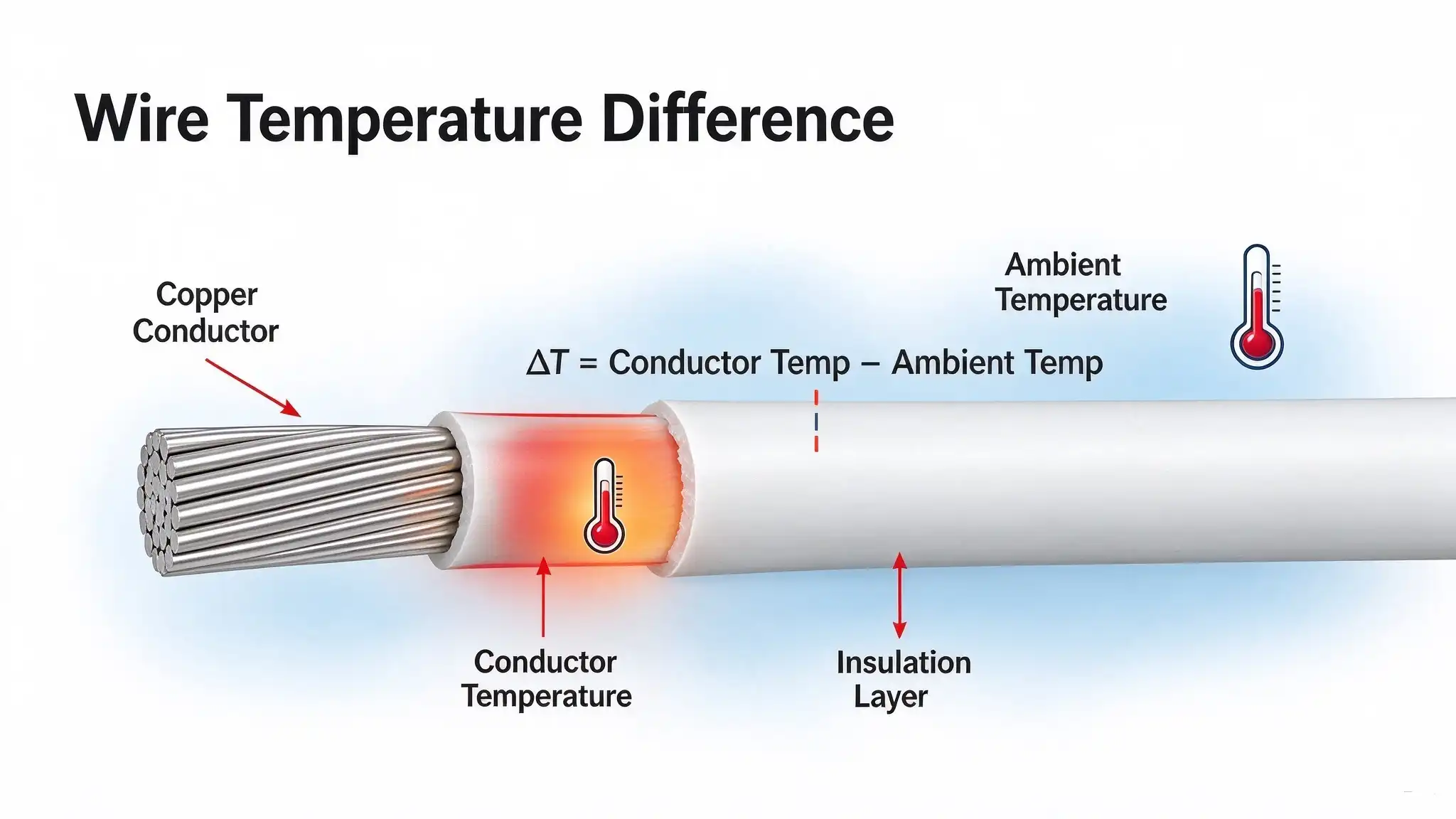
In practice, the temperature experienced by a wire can include both the surrounding environmental temperature and the heat generated by electrical current flowing through the conductor.
For example, a wire installed inside electrical equipment may experience additional heat from nearby components or its own electrical load.
Therefore, buyers should distinguish between:
Wire temperature ratings depend on several factors, including insulation material, material formulation, wire construction, and applicable certification requirements.
Different insulation materials have different thermal characteristics.
For example:
Two wires using the same general insulation material may have different ratings because their formulations, constructions, and certification requirements are not necessarily identical.
Not necessarily.
A higher temperature rating may be important for equipment operating in hotter environments, but it does not automatically make a wire the best choice for every application.
For example, a wire with a 200°C rating may offer a thermal capability that is unnecessary for equipment operating under normal temperature conditions.
Meanwhile, other requirements may be more important, such as:
The best choice is the wire that meets the actual application requirements, rather than simply the one with the highest temperature number.
Electrical current can generate heat as it passes through a conductor.
The amount of heat generated is related to current and conductor resistance. Under simplified steady-state conditions, conductor heating can be expressed using:
P = I²R
Where:
This explains why conductor size and electrical load matter when considering wire temperature.
A wire operating under a higher current may experience more heat generation. Its actual temperature also depends on heat dissipation, installation conditions, and surrounding components.
Therefore, a temperature rating alone cannot determine whether a particular wire size is suitable for a specific current.
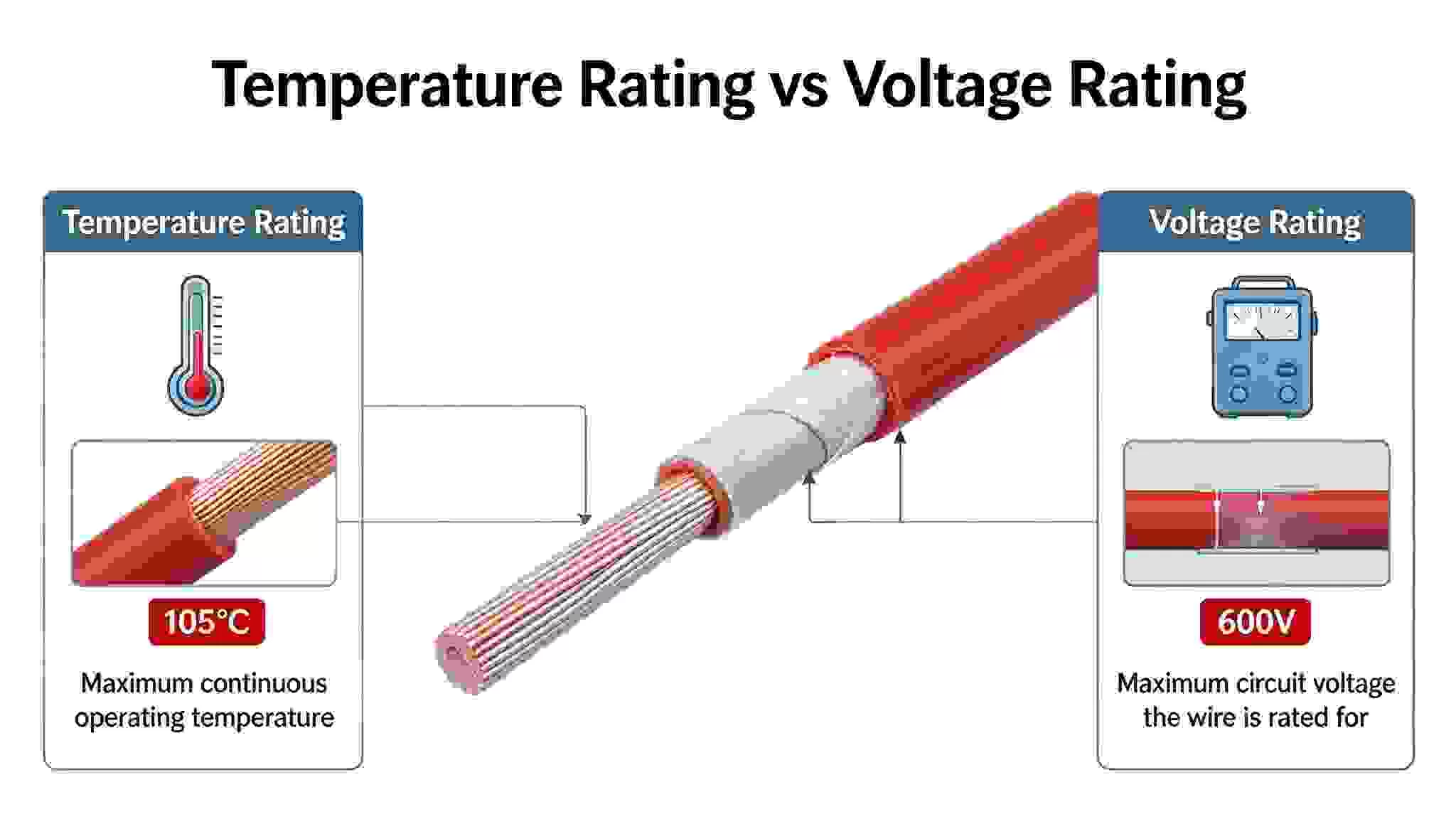
Temperature and voltage ratings describe different aspects of wire performance.
The temperature rating relates to the applicable thermal operating requirements, while the voltage rating specifies the electrical voltage classification under the relevant standard or certification.
A wire with a high temperature rating does not automatically have a high voltage rating.
For example, two wires may both be rated at 200°C but have different voltage ratings, conductor constructions, or insulation requirements.Before selecting a wire, buyers should confirm both ratings and make sure the complete wire specification matches the intended application.
UL wire styles provide useful information about the approved wire construction and its applicable ratings.
When comparing different UL styles, buyers should not look at temperature ratings alone.
Important details include:
For example, UL silicone wire styles and UL FEP wire styles may serve different application requirements even when their temperature ratings appear similar.
The correct comparison should be based on the complete approved construction and the relevant certification information.
Before placing an order, buyers should provide enough application information for the manufacturer to evaluate the requested wire construction.
The following details are particularly useful:
1.Required temperature rating.
2.Rated voltage.
3.Conductor size and material.
4.Solid or stranded conductor construction.
5.Insulation material.
6.Required UL style or other certification.
7.Operating environment and installation conditions.
If the wire will be exposed to continuous heat, temperature fluctuations, chemicals, or repeated movement, these conditions should also be communicated.
A clear specification reduces misunderstandings between the buyer and manufacturer.
Different applications require different insulation materials and wire constructions. Selecting the right solution begins with understanding the electrical and environmental requirements of the equipment.
Guangdong Zhengfeng Wire&Cable Co., Ltd. manufactures a range of wire and cable products, including silicone rubber wires, FEP wires, PVC wires, and cross-linked wires.
These product categories serve different application requirements:
Buyers should confirm the specific UL style, temperature rating, voltage rating, and construction before selecting a product.
You can explore our silicone rubber wires and cables to learn more about available wire solutions.
Choosing a wire temperature rating should begin with the actual operating environment, not simply the highest number available.
A suitable selection process should consider the following:
A well-matched wire specification helps support reliable equipment operation and avoids unnecessary material selection.
Before finalizing an order, buyers should review the manufacturer's technical documentation and confirm that the complete wire construction meets the intended application requirements.


Products
Navigation
QR Code


Copyright © 2026 Guangdong Zhengfeng Wire&Cable Technology Co., Ltd.