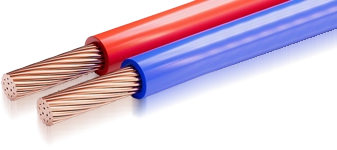
 Zhengfeng
 Oct 27,2026

1.What Is Spark Testing?
2.Why Is Spark Testing Used During Extrusion?
3.How Does an Online Spark Tester Work?
4.What Types of Insulation Defects Can Spark Testing Detect?
5.Does Passing a Spark Test Mean the Wire Is Fully Qualified?
6.Spark Testing vs. Dielectric Withstand Testing
7.What Factors Affect Spark Testing Results?
8.What Happens When a Spark-Test Alarm Occurs?
9.What Should Buyers Ask About Spark Testing?
10.Spark Testing at Guangdong Zhengfeng Wire&Cable Co., Ltd.
11.Frequently Asked Questions QuestionAnswer
During wire insulation extrusion, small defects can sometimes occur even when the finished wire looks normal. A thin spot, pinhole, or localized gap in the insulation may not be easy to identify through visual inspection alone.
This is one reason manufacturers use spark testing during wire production. It is an electrical inspection method designed to detect certain insulation defects while wire moves through a production line.
Understanding how spark testing works helps buyers better understand factory quality control, inspection limitations, and the role of different electrical tests.
Spark testing is an electrical test used to detect insulation discontinuities in suitable insulated wires and cables.
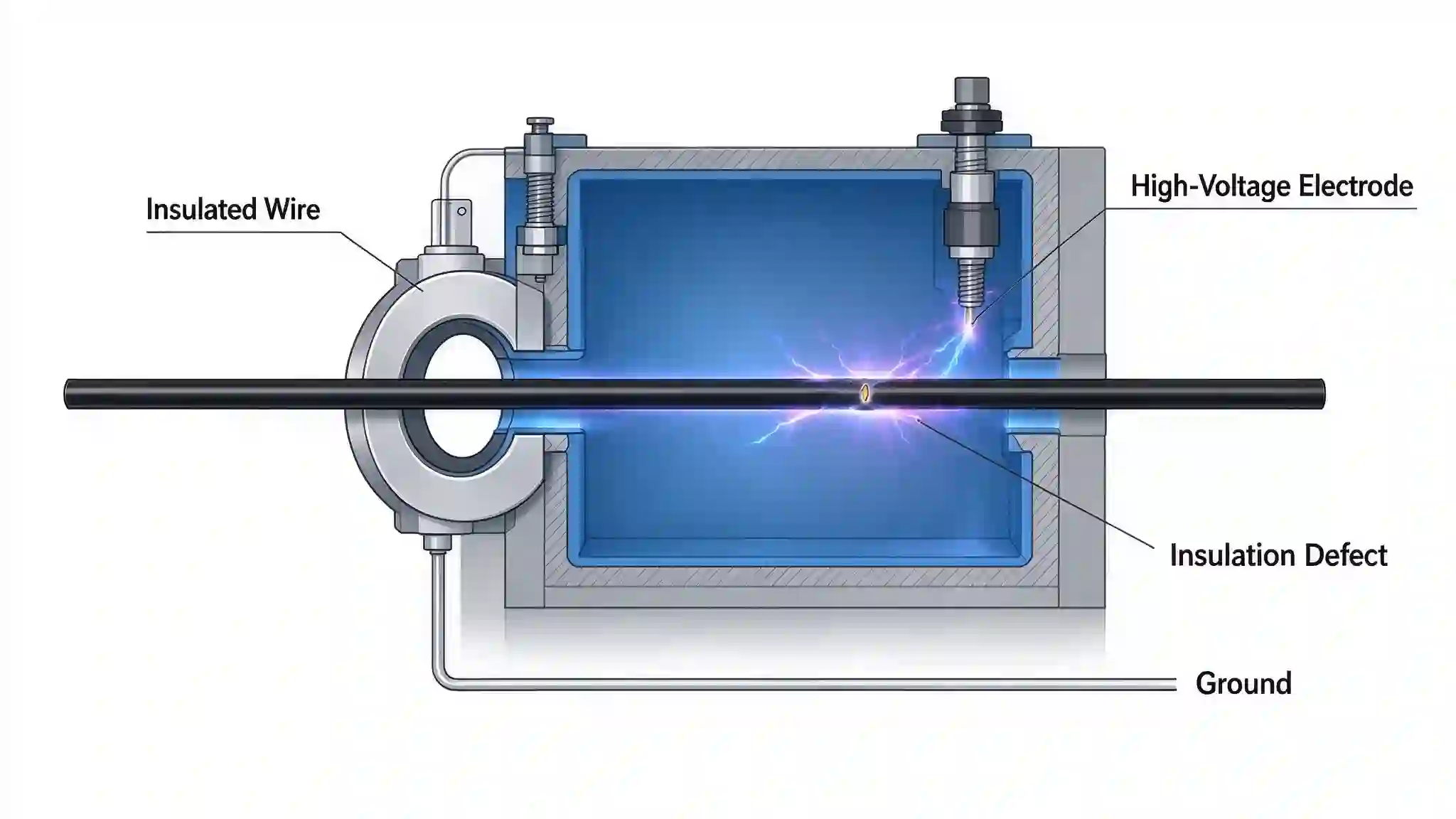
During the test, the wire passes through or alongside an electrode connected to a spark tester. A test voltage creates an electrical field around the insulation. If a defect provides an electrical path through the insulation to the conductor or grounded reference, the tester can detect the resulting electrical event.
Depending on the equipment, the system may trigger an alarm, record the event, or signal a production-line response.
Spark testing is particularly useful during continuous wire manufacturing because it can inspect the moving product without requiring a separate test on every short sample.
Extrusion forms the insulating layer around a conductor. Maintaining consistent insulation coverage is important, but manufacturing conditions can occasionally create local defects.
Potential issues include pinholes, missing insulation, or areas where the insulation is insufficient to meet the applicable requirements.
Spark testing provides an opportunity to detect certain defects as the wire passes through the inspection station. Finding an issue during production can help manufacturers investigate the process before the entire production run is completed.
However, spark testing is not a universal inspection method for every possible insulation problem. Its effectiveness depends on the test method, electrode arrangement, equipment settings, wire construction, and applicable requirements.
An online spark tester typically includes a high-voltage source, an electrode assembly, a detection circuit, and an alarm or monitoring system.
The process generally follows these steps:
1.The insulated wire moves continuously through the designated test area.
2.The electrode establishes the required electrical field around the insulation.
3.If a detectable insulation defect allows current to flow to the conductor or grounded reference, the tester registers an event.
4.The system signals the event so that production personnel can respond according to the factory's procedures.
The electrode design may vary. Some systems use bead-chain electrodes, while others use brush or other suitable electrode arrangements.
The test voltage, waveform, electrode configuration, and line speed must be appropriate for the product and the applicable test requirements. Simply installing a spark tester does not guarantee that every possible defect will be detected.
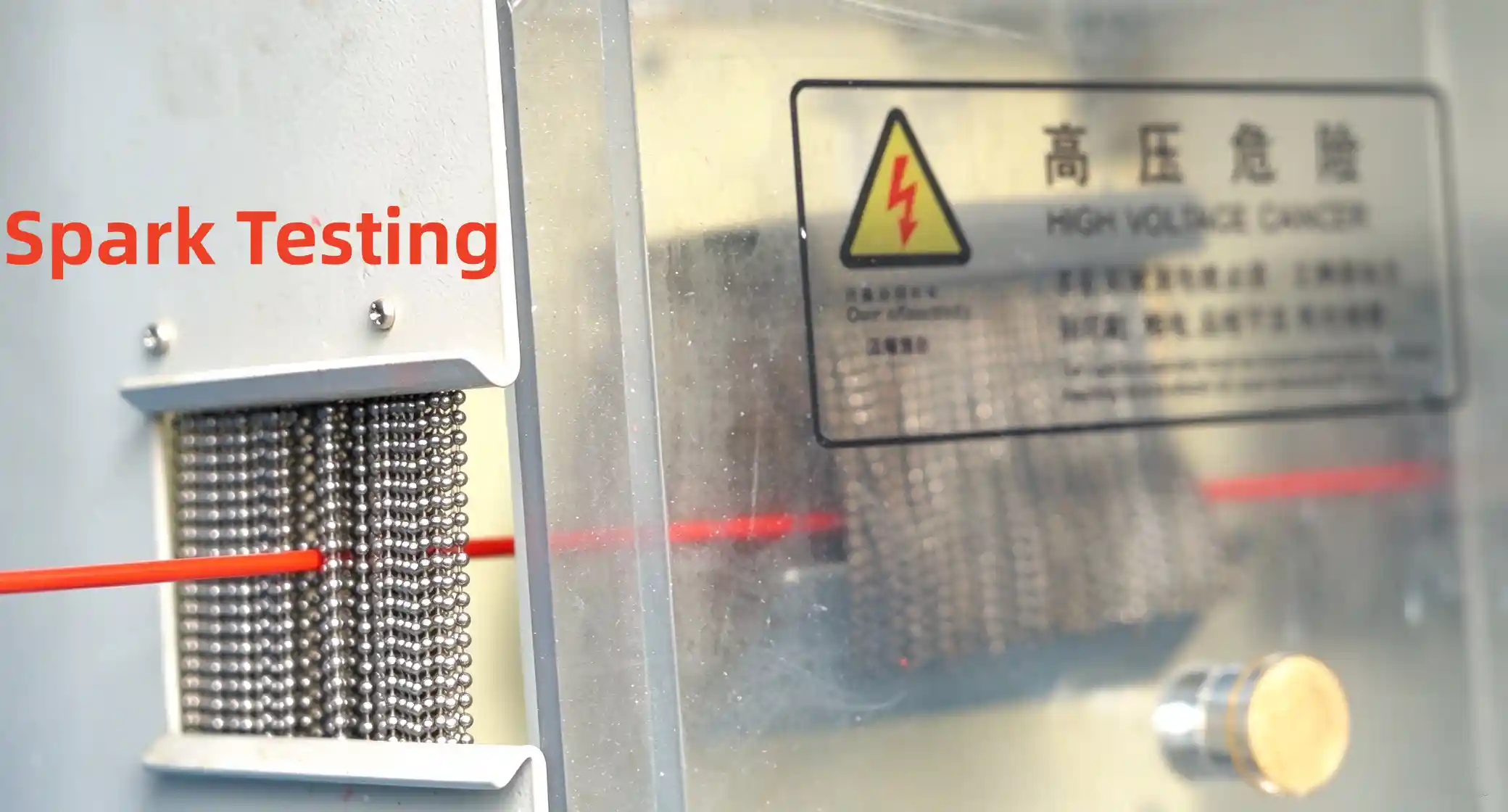
Spark testing is intended to identify electrical discontinuities that allow the test field to reach the conductor or grounded reference through a defect.
Examples may include:
The exact defects detectable by a particular system depend on the insulation material, wall thickness, test voltage, electrode design, and production conditions.
Importantly, a defect that does not produce a detectable electrical event may not be identified by spark testing. Cosmetic imperfections, dimensional deviations, and other problems that do not create the required electrical path may need different inspection methods.
This is why manufacturers combine appropriate electrical inspection with other quality-control checks when required.
No. Passing a spark test indicates that no disqualifying event was detected under the specified test conditions. It does not prove that every property of the wire meets every requirement.
For example, spark testing does not by itself establish:
These characteristics require their own verification methods where applicable.
A wire may pass a spark test but still require dimensional inspection, conductor resistance measurement, visual checks, or other tests specified for the product.
For buyers, the important question is not simply whether a manufacturer uses spark testing, but whether the overall inspection plan addresses the requirements of the specific wire being purchased.
Spark testing and dielectric withstand testing both involve electrical stress, but they are not automatically interchangeable.
|
Comparison |
Spark Testing |
Dielectric Withstand Testing |
|
Typical purpose |
Detect certain insulation defects during production |
Verify insulation withstand performance under specified test conditions |
|
Common use |
Online wire manufacturing or rewinding |
Product qualification, routine testing, or other specified inspection stages |
|
Test setup |
Often uses an electrode surrounding or contacting the moving insulated wire |
Uses a defined electrical connection and test procedure for the specimen or product |
|
Inspection scope |
Local defects detectable under the spark-test conditions |
Electrical withstand performance under the prescribed test conditions |
|
Can one replace the other? |
Only where the applicable standard or specification explicitly permits it |
Depends on the applicable product requirements and test method |
Can one replace the other?Only where the applicable standard or specification explicitly permits itDepends on the applicable product requirements and test method
Some standards permit spark testing to serve as an alternative to a specified dielectric test for particular wire constructions and conditions. This should never be assumed for every product.
The required test method must be determined from the applicable standard, approved construction, and customer specification.
Reliable spark testing depends on more than the nominal voltage setting.
Important factors include:
Test voltage and waveform: The settings must follow the applicable test requirements. An inappropriate setting may reduce detection effectiveness or create unnecessary production interruptions.
Electrode condition and configuration: The electrode must be suitable for the wire dimensions, insulation surface, and testing method.
Line speed: The equipment must operate within its specified performance range for the actual production speed.
Product construction: Insulation material, wall thickness, diameter, and conductor arrangement can affect the test setup.
Equipment maintenance and verification: The testing system should be maintained and checked according to the manufacturer's instructions and the relevant quality procedures.
These factors explain why spark testing should be treated as a controlled inspection process rather than simply a machine that is switched on during production.
When a spark tester registers an event, the factory should follow its established procedures to investigate the affected wire and determine the appropriate response.
Depending on the equipment and production process, the event may be counted, recorded, marked, or linked to a production-line alarm.
Personnel may need to identify the affected section, inspect the insulation, review process conditions, and determine whether the product can be accepted, repaired where permitted, or rejected.
An alarm does not automatically mean that the entire production batch is defective. Equally, an alarm should not be ignored simply because the wire looks normal.
The correct response depends on traceability, the applicable acceptance criteria, and the manufacturer's documented procedures.
Buyers who require evidence of insulation inspection can ask manufacturers a few specific questions:
These questions are more useful than asking only whether a factory owns a spark tester.
The objective is to understand how the test fits into the quality-control process and whether the overall inspection plan matches the product's requirements.
At Guangdong Zhengfeng Wire&Cable Co., Ltd., online spark testers are among the inspection equipment used in wire manufacturing, alongside other electrical and physical testing equipment.
Different wire products may have different construction requirements and inspection needs. The appropriate testing method and conditions must therefore be determined according to the applicable product specification and production process.
Our product range includes PVC wires, silicone rubber wires, FEP-insulated wires, and XLPE wires for various electrical and industrial applications.
For buyers evaluating a wire supplier, understanding the manufacturer's inspection process can provide a clearer picture of how insulation defects are monitored and how inspection fits into the broader quality-control system.
If your project has specific electrical testing or inspection requirements, our team can discuss the relevant product specifications and verification needs.


Products
Navigation
QR Code


Copyright © 2026 Guangdong Zhengfeng Wire&Cable Technology Co., Ltd.