 Zhengfeng
 Apr 01,2026

Content
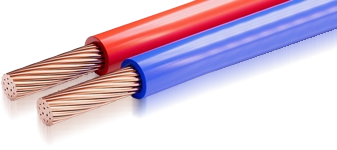
In the global electrical and electronics industry, safety and compliance are non‑negotiable standards, and UL‑certified wire represents the gold standard for reliable, certified wiring solutions. Whether you manufacture household appliances, medical devices, automotive components, or new energy equipment, choosing UL‑certified wire is the first step to ensuring product safety, meeting international market access requirements, and building brand trust. This comprehensive guide breaks down all essential information about UL wire — from its core definition and common types to key selection criteria, with a focus on a leading Chinese UL wire manufacturer: GUANGDONG ZHENGFENG WIRE & CABLE CO., LTD., holding UL file numbers E522608 and E526188. We also answer the most frequently asked questions about UL wire, providing professional, actionable insights for global businesses.
UL wire refers to wire and cable rigorously tested and certified by Underwriters Laboratories (UL), a world‑renowned independent safety science organization based in the United States. UL sets strict standards for wire materials, electrical insulation, flame resistance, temperature resistance, voltage rating, and marking requirements. Only wire that meets these standards and passes ongoing follow‑up inspections is authorized to bear the UL mark — a symbol of safety, quality, and compliance, and a mandatory requirement for market entry into North America (the U.S. and Canada) as well as many other international markets.
UL wire certification is not a one‑time approval: manufacturers must maintain consistent product quality, undergo regular UL follow‑up inspections, and comply with UL marking and production regulations to retain certification. The certification covers every stage of wire production, from raw material selection (such as copper conductors and insulation materials) to manufacturing processes and finished‑product testing, ensuring UL wire performs reliably in diverse operating conditions including high temperatures, high voltage, corrosion, and frequent flexing.
In addition, most UL wire complies with international environmental regulations such as RoHS and REACH, restricting the use of hazardous substances including lead and mercury — making it suitable for eco‑friendly manufacturing worldwide.
One of the most common questions about UL wire is: “What are the main types of UL wire and their applications?” UL wire is classified by insulation material, voltage rating, temperature resistance, and structural design, with each type tailored to specific industry needs. Below are the most widely used categories, their core features, and typical applications:
Polyvinyl chloride (PVC) wire is the most common type, valued for its low cost, ease of processing, and good electrical insulation. The most popular models are UL1007 and UL1015:
UL1007: Rated at 300V, 80°C, with bare or tinned copper conductors. It is the top choice for internal wiring in household appliances (refrigerators, microwave ovens), small electronic devices, and low‑voltage signal transmission systems.
UL1015: Rated at 600V, 105°C, with a thicker insulation layer than UL1007. Suitable for industrial equipment, high‑temperature low‑voltage environments, and heavy‑duty electronic device wiring.
PVC wire serves as the backbone for general electrical applications, striking an ideal balance between performance and cost‑effectiveness — making it the most popular wire type for small and medium‑sized manufacturers.
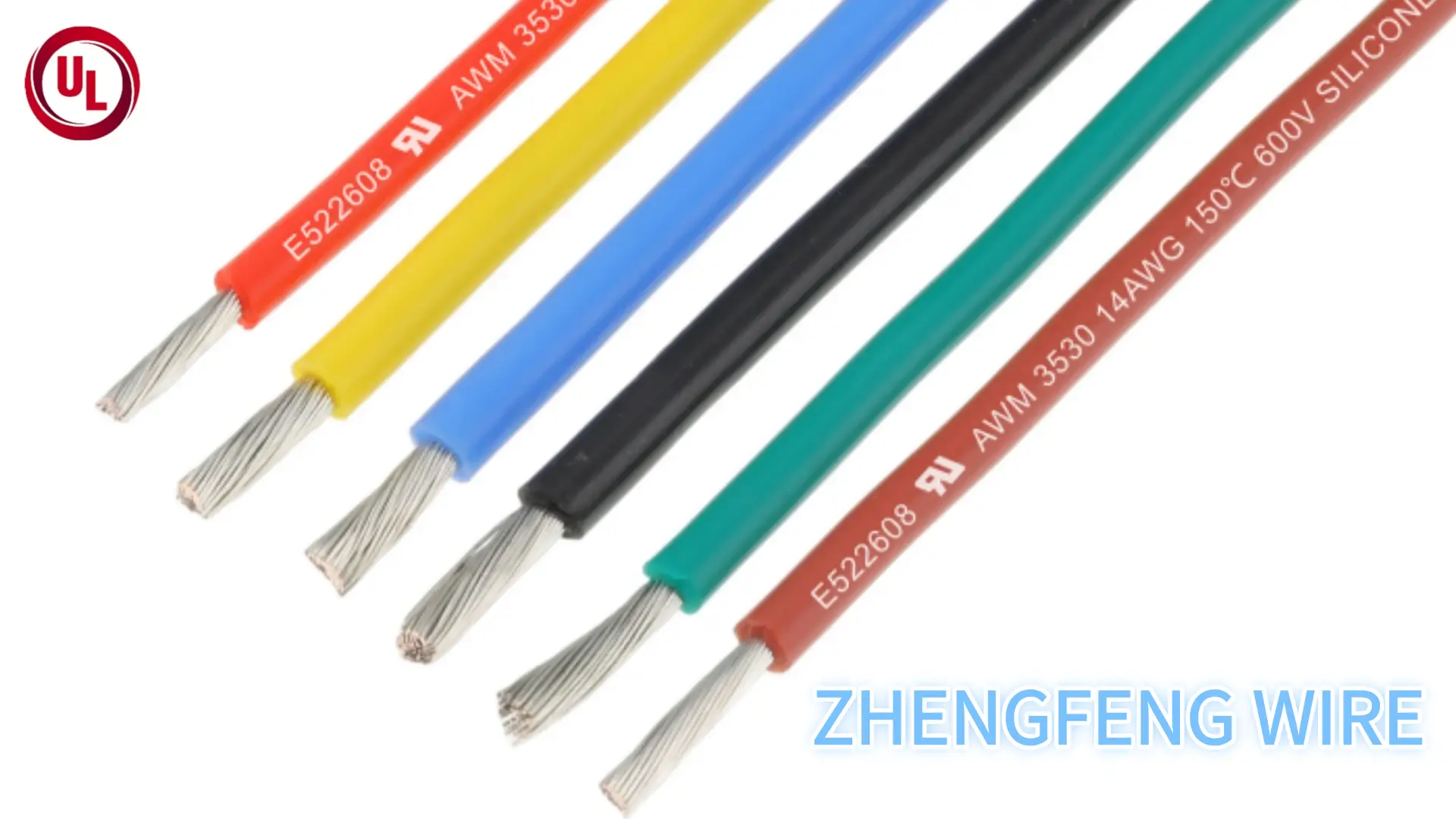
Silicone rubber wire is engineered for high‑temperature environments, offering excellent flexibility and temperature resistance (key model UL3135 withstands up to 200°C). It features strong flame resistance and weatherability, maintaining stable performance across extreme temperature ranges from -40°C to 200°C. Typical applications include lighting equipment (high‑temperature lamps, LED luminaires), heating appliances (electric stoves, water heaters), automotive engine compartments, and high‑temperature components in medical devices. Demand for silicone rubber UL wire remains high among lighting and automotive manufacturers due to the need for= high‑temperature, flexible wiring solutions.
Polytetrafluoroethylene (PTFE) wire (also known as FEP/PTFE wire) is the premier choice for high‑end applications, delivering exceptional chemical resistance, temperature resistance (UL1330/UL1332 models withstand 150°C–200°C), and superior high‑frequency performance. It is oil‑, acid‑, and alkali‑resistant, compatible with most solvents, and has a low friction coefficient and non‑stick properties. Primary applications include aerospace equipment, precision medical devices (surgical instruments), new energy battery systems, and industrial automation equipment. UL1332 is the most searched teflon wire model online, regarded as a "star product" in the cable industry for its well‑rounded high performance.
Cross‑linked polyethylene (XLPE) wire uses cross‑linked insulation material, offering better temperature resistance (150°C) and mechanical strength than PVC wire, along with excellent flame retardancy and aging resistance. It is widely used in high‑voltage equipment, new energy storage systems, data centers, and power transformers. Driven by the global boom in new energy and digital infrastructure, demand for XLPE wire has grown rapidly in recent years.
The SPT series flexible cords (SPT‑1, SPT‑2, SPT‑3) are UL‑certified power cords designed specifically for residential lighting and decorative wiring, often referred to as "lamp cord". Lightweight, flexible, flame‑resistant, and abrasion‑resistant, they comply with UL 62/1581 standards. SPT‑1 is commonly used for table lamps, floor lamps, and small household appliances, while SPT‑2/3 are designed for higher‑power decorative lighting and outdoor luminaires.
Beyond types and applications, customers frequently ask critical questions about UL wire. Zhengfeng Wire has compiled and answered the most common inquiries to provide clear, professional guidance for businesses and purchasers:
Choose silicone rubber wire (e.g., UL3135) for high‑temperature environments (≤200°C) where high flexibility and cost‑effectiveness are priorities, such as new energy batteries and automotive internal wiring. Silicone rubber wire is more flexible and economical than PTFE wire.
Choose PTFE wire (e.g., UL1332) for high‑temperature environments (≤200°C) requiring chemical resistance and high‑frequency performance, such as lighting fixtures and aerospace equipment. PTFE wire performs better in harsh chemical environments but at a relatively higher cost.
Yes — UL certification is widely recognized in Canada, and many UL‑certified wires also carry the cUL mark (UL's Canadian certification), complying with Canadian CSA standards. For the Canadian market, ensure the wire bears the cUL mark for full compliance. Zhengfeng Wire's UL wire is cUL‑certified.
UL imposes strict rules for marking all certified wire, including: manufacturer name, voltage rating, temperature rating, conductor gauge, model number, and the UL mark. Markings must be clear, durable, and visible along the length of the wire — non‑compliant marking will result in loss of UL certification.
Yes — UL wire manufacturers can provide customized solutions, including custom conductor sizes, insulation colors, wire lengths, and packaging. Customized UL wire must still meet core UL standards and pass UL testing to retain certification eligibility.
With over 25 years of industry experience, global certifications, and consistent quality meeting the world's strictest standards, Guangdong Zhengfeng Wire & Cable Co., Ltd. has become a preferred partner for global buyers. Zhengfeng Wire produces UL wire covering a full range of materials, models, and applications.
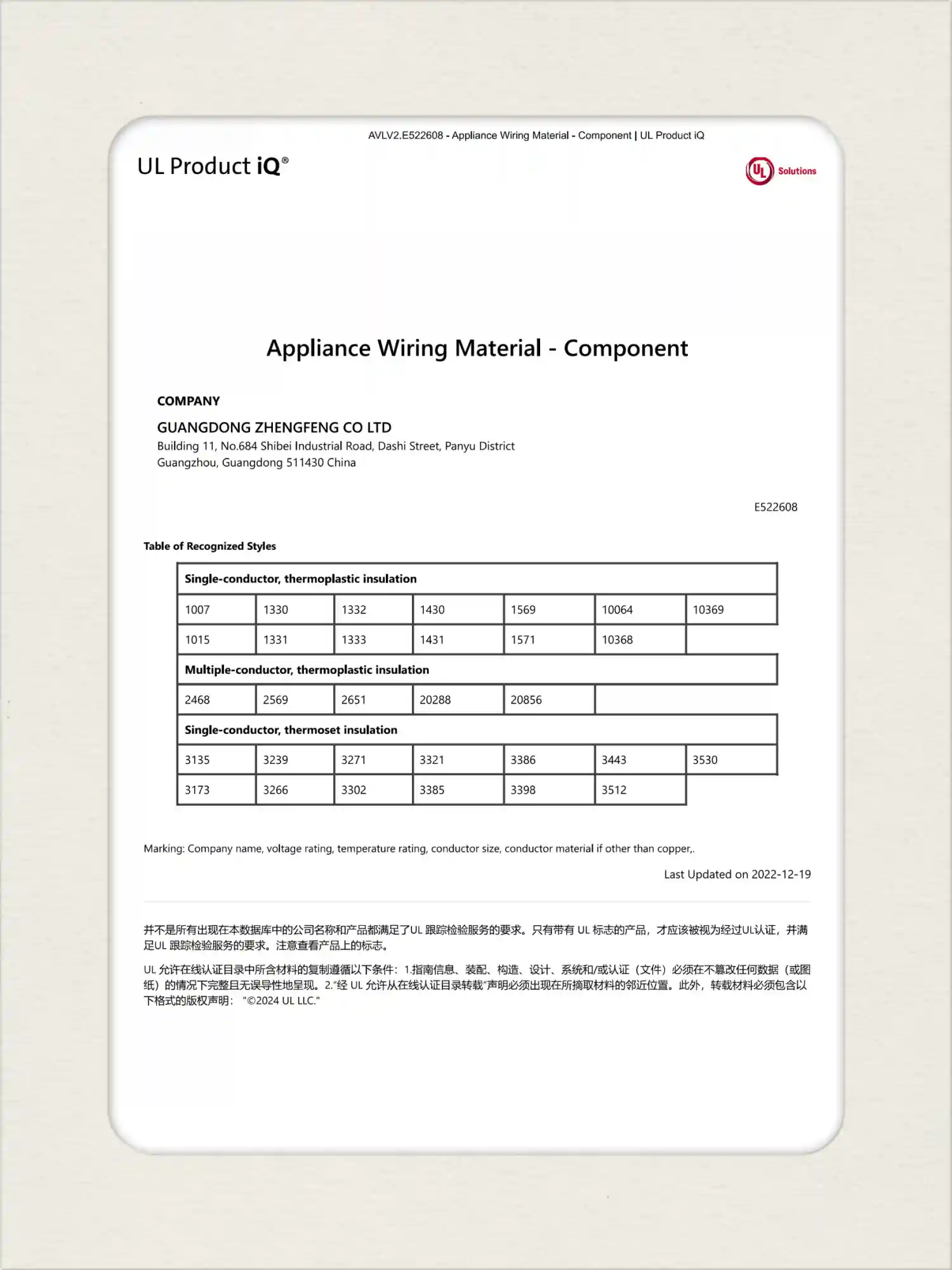
UL file NO. E522608: Covers various UL electrical wiring materials, including single‑conductor thermoplastic insulated wire (UL1007, UL1015, UL1330, UL1332, etc.), multi‑conductor thermoplastic insulated wire (UL2468, UL20288, etc.), and single‑conductor thermoset insulated wire (UL3135, UL3239, etc.). This certification includes core UL wire models for household appliances, industrial equipment, and medical devices.
UL file NO. E526188: Covers UL flexible cords, including the SPT series (SPT‑1, SPT‑2, SPT‑3, SPT‑1W, SPT-2W) and decorative cords (XTW, PXT, PXWT). Designed specifically for residential lighting, decorative wiring, and flexible power cord applications, this certification also includes cUL approval for the Canadian market — allowing Zhengfeng's flexible cords to fully comply with U.S. and Canadian requirements.
All wire produced by Zhengfeng Wire also holds Japan PSE (S‑JET mark) certification, fully complies with RoHS/REACH environmental regulations, and maintains a product quality stability rate of 99.9% — a testament to its strict production and testing processes.
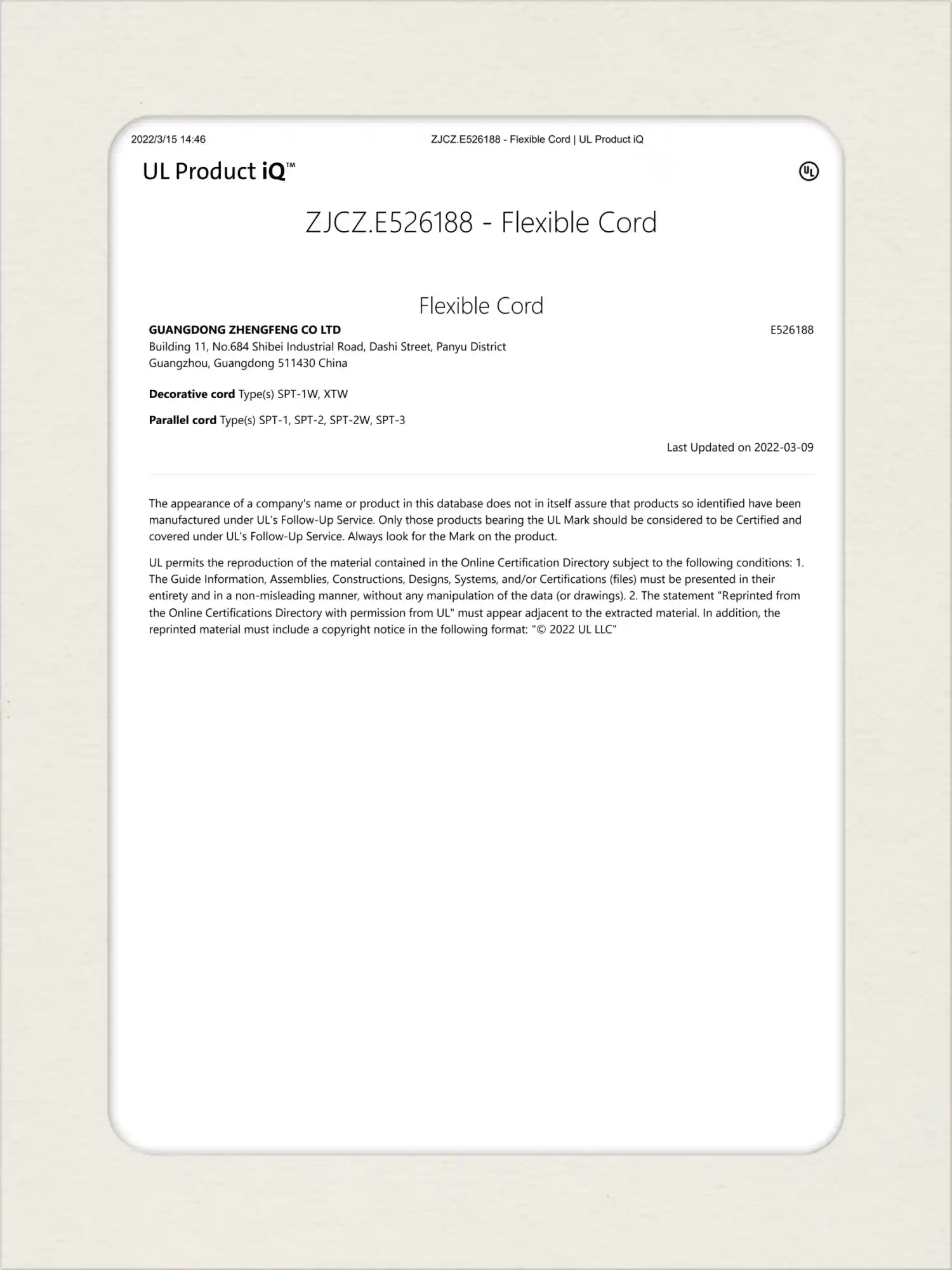
For businesses sourcing UL wire from China, Guangdong Zhengfeng Wire & Cable Co., Ltd. delivers reliable, high‑quality UL wire backed by genuine UL certifications (UL file NO. :E522608, E526188), over 25 years of industry experience, 99.9% quality stability, and global service expertise. Whether you require Silicone wire, Teflon wire, PVC wire ,Cross-Linked wire or SPT flexible cord for lighting applications, Zhengfeng Wire provides customized solutions and worldwide shipping to meet your unique needs.
Contact your trusted China UL wire manufacturer — Guangdong Zhengfeng Wire & Cable Co., Ltd., we are available 24/7 to assist you!
Tel / WhatsApp / WeChat: +86 138 2929 2517 / +86 147 4930 7879
Email: manager01@wire‑cablemanufacturer.com


Products
Navigation
QR Code

Copyright © 2026 Guangdong Zhengfeng Wire&Cable Technology Co., Ltd.