 Zhengfeng
 Oct 28,2026

1.Why Do Some Parallel Wires Look Different on Each Side?
2.What Is Parallel Wire?
3.Why Are Different Insulation Colors Used?
4.What Is Ribbed Insulation on Parallel Wire?
5.Does the Ribbed Side Always Mean Negative or Positive?
6.Color Identification vs. Ribbed Insulation
7.How Should Buyers Specify Parallel Wire Identification?
8.What Should Buyers Check Before Approving a Sample?
9.Parallel Silicone Wire for Customized Applications
10.Choosing the Right Identification Design
11.Frequently Asked Questions
These differences are not always decorative. Depending on the product and its application, they can support conductor identification during installation, assembly, and maintenance.
For wire buyers, understanding these design features is useful when selecting a parallel wire for a particular electrical assembly. The right identification method should be specified before production rather than assumed from the wire’s appearance.
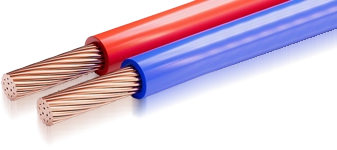
Parallel wire consists of two insulated conductors arranged side by side, often with their insulation joined along the length. This construction allows the two conductors to be handled as one cable assembly while remaining electrically separate.
Parallel wire is used in various applications, including certain lighting products, low-voltage electrical connections, and equipment wiring. The appropriate construction depends on the required electrical ratings, installation conditions, and applicable product standards.
Some parallel wires use PVC insulation, while others may use silicone rubber or other materials selected for the intended operating environment. The insulation material and identification design are separate choices: the material determines relevant physical and thermal properties, while colors and surface features can help distinguish the conductors.
Different insulation colors provide a simple visual way to distinguish conductors. For example, a parallel wire with red and black insulation allows the two sides to be recognized quickly during assembly.
Color identification can help reduce confusion when multiple wires are connected according to a wiring diagram or product specification. It can also make inspection easier when the intended conductor colors are clearly documented.
However, color meaning is not universal across all electrical products and applications. Red is not automatically positive in every system, and black does not always have the same electrical function. Buyers should confirm conductor functions using the applicable wiring diagram, product requirements, and relevant standards.
When ordering custom parallel wire, specify both the required colors and the intended identification scheme.

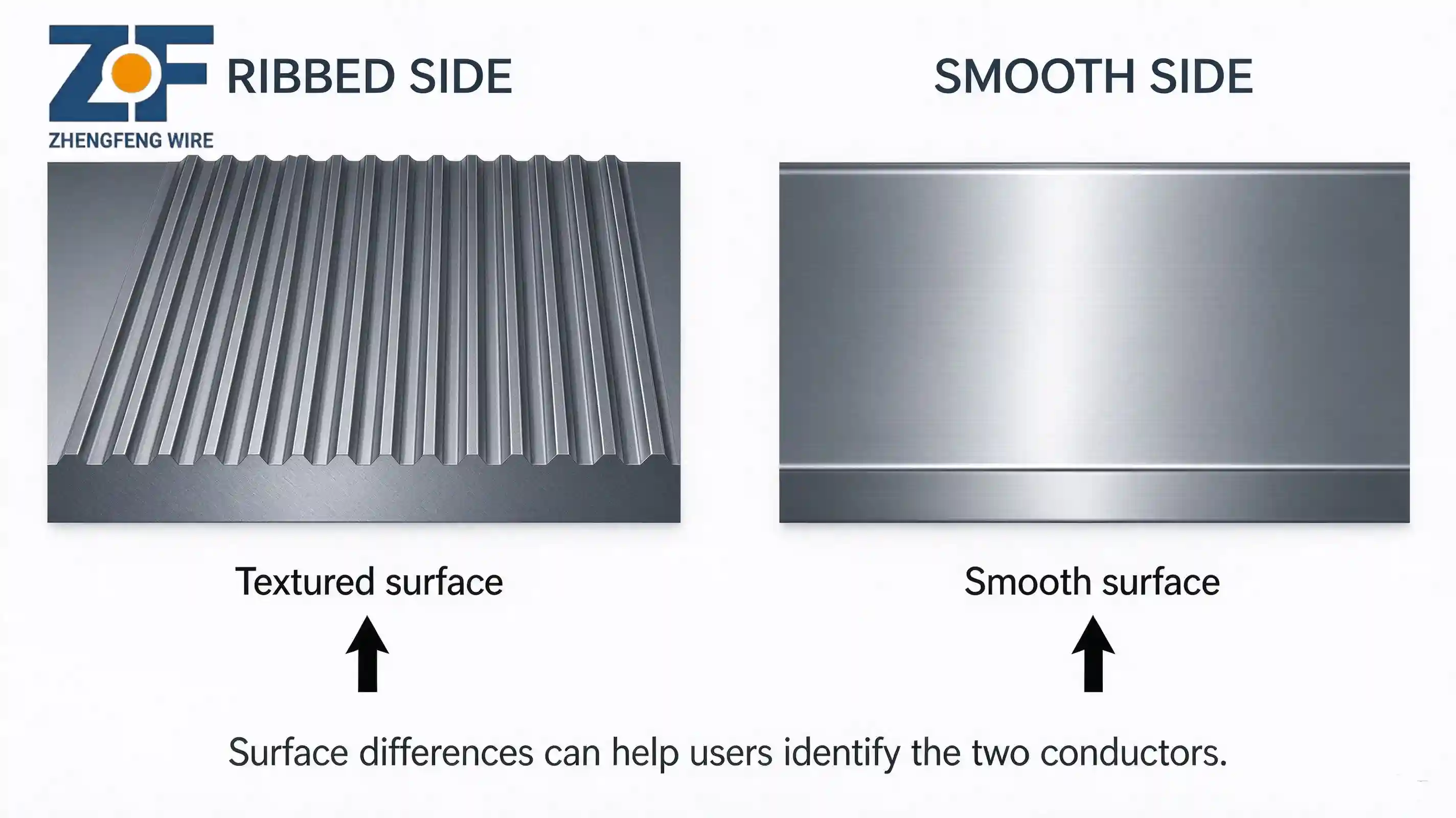
Some parallel cords have a ribbed or raised texture on one side and a smoother surface on the other. This physical difference can help users distinguish between the two conductors by sight or touch.
The ribbed surface is a form of physical identification. Unlike color, which depends on visual recognition, a distinct surface texture may still be noticeable when lighting is poor or the insulation colors are similar.
Ribbed and smooth surfaces are not universal features of all parallel wires. Their availability and intended meaning depend on the specific product design. Buyers should not assume that every parallel cord has a ribbed side or that a ribbed side always represents a particular polarity.
No. A ribbed surface should not automatically be interpreted as positive, negative, neutral, or ground.
In some polarized cord applications, a surface feature may be used to identify a designated conductor. The intended function must be established by the applicable product specification and wiring convention.
This distinction matters because a physical feature is only useful when the user knows what it represents. If a customer requires one side of a parallel cord to identify a particular conductor, that requirement should be documented in the drawing or specification.
For customized wire, buyers should confirm the identification method with the manufacturer before production and ensure that it matches the intended assembly design.
Color and surface texture can both help identify conductors, but they work in different ways.
Color identification is primarily visual. It is useful when the two conductors need to be distinguished quickly by appearance. Ribbed insulation provides a physical difference that can be recognized by sight or touch.
Some products may use one method, while others may combine colors, surface features, or printed markings. The choice depends on the application, the required identification convention, and the available product construction.
Neither method should be assumed to replace the other in every situation. If a product specification requires a particular color or texture, the manufacturer should follow that requirement rather than substitute a different feature without approval.
When requesting a quotation for parallel wire, buyers should describe the identification requirements as clearly as the electrical and mechanical specifications.
Important details include:
A clear description helps prevent misunderstandings between the buyer and manufacturer. It is especially important when the wire will be integrated into an existing product assembly.
A sample should be checked against the agreed specification, not just its general appearance.
For a parallel wire, buyers can verify whether the number of conductors, insulation colors, overall construction, and any required surface features match the approved drawing. If a ribbed side is required, the sample should be checked to confirm that the feature is present on the intended side.
Color and texture alone do not establish electrical performance or regulatory compliance. The wire must also meet the applicable construction, rating, and testing requirements.
If the wire is intended for a polarized application, the buyer should verify the identification scheme against the assembly documentation before approving the sample for production.
For applications requiring flexible insulation and a two-conductor parallel construction, silicone parallel wire may be an option to consider, subject to the required electrical ratings and operating conditions.
Guangdong Zhengfeng Wire&Cable Co., Ltd. offers silicone rubber wires and cables, including parallel silicone wire. Our red-and-black, two-core parallel silicone wire is one example of a product in which different insulation colors help distinguish the two sides.
Buyers considering a customized design should confirm the required colors, conductor construction, dimensions, and any additional identification features before placing an order. Specific ribbed or smooth surface designs should be confirmed with the manufacturer rather than assumed to be available on every model.
For product details, explore our [parallel silicone wire] options and share your application requirements for further specification confirmation.
Different colors and ribbed insulation can make parallel wires easier to identify, but the appropriate method depends on the intended application.
Color provides a visual distinction, while surface texture offers a physical difference between the two sides. In some designs, these methods may be combined with printed markings or other identification features.
For buyers, the most reliable approach is to define the required identification method in the product specification, confirm its meaning in the wiring documentation, and verify the sample before mass production.
Clear identification starts with clear requirements. By confirming the wire construction and identification features early, buyers and manufacturers can reduce avoidable confusion during assembly and product verification.


Products
Navigation
QR Code


Copyright © 2026 Guangdong Zhengfeng Wire&Cable Technology Co., Ltd.