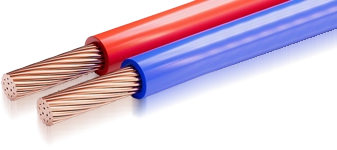
 Zhengfeng
 Sep 29,2026

Content
2.Electronic Wire vs. Electrical Cable: What Is the Difference?
3.Main Types of Electronic Wire
4. What Are Electronic Wires Used For?
5. How to Choose the Right Electronic Wire?
6. Electronic Wire Selection Checklist
7. Common Electronic Wire Problems Caused by Incorrect Selection
8. Electronic Wire for OEM and Custom Applications
9. How to Select an Electronic Wire Manufacturer?
10. Electronic Wire vs. Hook-Up Wire
11. Frequently Asked Questions About Electronic Wire
12. Conclusion: Choosing the Right Electronic Wire
Electronic wire is an insulated electrical conductor designed to transmit electrical power or signals within electronic equipment, electrical assemblies, appliances, control systems, and other low-voltage applications. Unlike large power cables designed primarily for high-current transmission over longer distances, electronic wires are typically smaller, more flexible, and manufactured for internal wiring and equipment connections.
Electronic wire is available in many constructions, insulation materials, conductor configurations, voltage ratings, temperature ratings, and certification types. Common examples include PVC electronic wire, UL hook-up wire, silicone wire, Teflon wire, irradiated PVC wire, and other appliance and equipment wiring products.
Choosing the correct electronic wire requires more than selecting an appropriate wire gauge. Engineers and purchasing teams must consider conductor size, insulation material, voltage, temperature, flexibility, environmental conditions, certification requirements, and the intended application.
This guide explains what electronic wire is, the main types of electronic wire, where it is used, and how to select the right product for your application.
Electronic wire is a single electrical conductor, normally made from copper or tinned copper and covered with an insulating layer. It is primarily used to connect electrical or electronic components inside equipment, appliances, control panels, instruments, battery systems, and other electrical assemblies.
A typical electronic wire consists of two major parts:
Conductor:
The conductor carries electrical current or electrical signals. Copper is widely used because of its excellent electrical conductivity and relatively good flexibility. Tinned copper may be selected when improved corrosion resistance or solderability is required.
Insulation:
The insulation surrounds the conductor and prevents unintended electrical contact. Different insulation materials provide different combinations of temperature resistance, flexibility, chemical resistance, abrasion resistance, and flame performance.
Depending on the application, electronic wire may be manufactured with solid or stranded conductors. Stranded constructions are commonly preferred when the wire needs to withstand repeated bending or installation movement.
Electronic wire is also commonly identified by standards such as UL Style numbers. For example, UL1015, UL1569, UL1007, UL1332, UL3135, and UL3512 are different recognized wire constructions intended for different applications and performance requirements.
The terms "electronic wire" and "electrical cable" are sometimes used interchangeably, but they can describe different products.
In general, a wire refers to an individual conductor with insulation, while a cable may contain two or more insulated conductors assembled together and protected by an outer jacket or other construction.
For example:
The distinction becomes particularly important when selecting a product. A wire intended for internal equipment wiring should not automatically be substituted for a power cord or multi-conductor cable.
There is no single electronic wire suitable for every application. Different insulation materials and constructions are developed for different electrical, thermal, mechanical, and environmental requirements.
The following are some of the most commonly used types.
PVC-insulated electronic wire is one of the most widely used options for general-purpose internal wiring.
PVC insulation provides a practical balance of electrical insulation, flexibility, mechanical protection, manufacturability, and cost. Depending on the wire construction and certification, PVC electronic wire can be used in electronic equipment, appliances, control systems, lighting products, and electrical assemblies.
Typical advantages include:
Common UL-style PVC wires include products such as UL1007, UL1015, and UL1569, although their specific ratings and construction requirements are different.
Engineers should always verify the applicable UL Style and manufacturer's datasheet rather than assuming that all PVC electronic wires have the same specifications.
Silicone wire uses silicone rubber as the insulation material and is commonly selected when flexibility and temperature performance are important.
Compared with many conventional PVC-insulated wires, silicone wire can provide a softer and more flexible construction. This makes it useful for applications where the wire needs to bend around components, move during operation, or fit into limited installation spaces.
Silicone wire is commonly used in:
Silicone wire is available in different conductor sizes and constructions, including fine-stranded designs for applications requiring enhanced flexibility.
When selecting silicone wire, engineers should check the actual temperature rating, voltage rating, conductor construction, insulation thickness, and applicable certification.
Teflon-insulated wire is commonly selected for applications requiring higher temperature resistance and specialized insulation performance.
In the wire industry, "Teflon wire" may refer to wires using fluoropolymer insulation materials such as FEP. The specific material should always be confirmed against the manufacturer's technical specification.
Fluoropolymer-insulated wires are used in applications where ordinary PVC insulation may not provide sufficient thermal or environmental performance.
Typical applications include:
For example, UL1332 wire with FEP insulation is designed for applications where higher temperature performance is required.
Hook-up wire is a common category of single-conductor wire used for internal electrical connections.
It is frequently installed between:
UL hook-up wire can be manufactured with different insulation materials and electrical ratings. Examples include UL1007, UL1015, and UL1569.
The correct UL Style should be selected according to the required voltage, temperature, conductor size, insulation construction, and application.
Irradiated crosslinked wire uses a crosslinked insulation structure created through irradiation processing.
Compared with conventional thermoplastic insulation, crosslinked materials can provide improved thermal and mechanical characteristics for certain applications.
Depending on the insulation material, irradiated wire can be designed for applications involving:
Crosslinked PVC and crosslinked PE wires are examples of this category.
The appropriate product should be selected according to its specific certification and technical data rather than based only on the general term "irradiated wire."
Some applications require multiple conductors to remain together during installation.
Parallel wire typically contains two or more insulated conductors arranged side by side. Multi-conductor cable can contain several individually insulated conductors assembled into a common structure.
These constructions can simplify wiring and reduce installation time.
They are commonly used for:
The number of conductors, conductor size, insulation material, voltage rating, and overall construction should all be considered before selecting the product.
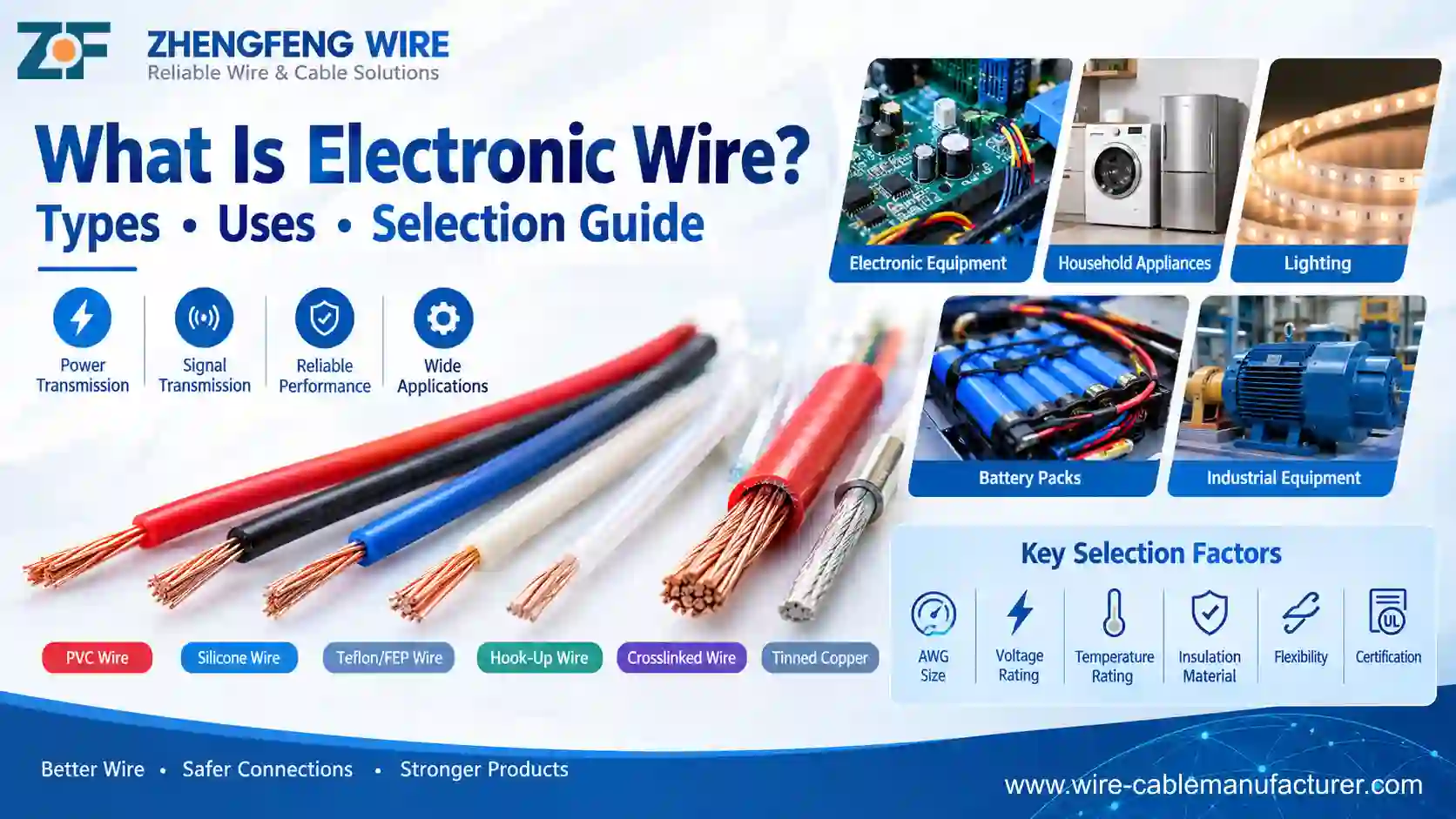
Electronic wire is used in a wide range of electrical and electronic products.
Electronic wire can connect circuit boards, switches, terminals, power supplies, displays, sensors, and other internal components.
Typical equipment includes:
The wire gauge and insulation should be matched to the current, voltage, temperature, and mechanical requirements of the equipment.
Electronic wires are widely used inside household appliances.
Examples include:
The insulation material is particularly important in appliances because wiring may be exposed to heat, vibration, moisture, or repeated movement.
Electronic wire is also commonly used inside lighting products and fixtures.
Applications include:
For high-temperature lighting applications, fluoropolymer or other high-temperature insulation may be preferred depending on the design requirements.
Electronic wire plays an important role in battery systems and electrical energy storage equipment.
It may be used for:
Silicone wire is often considered for battery applications because of its flexibility and temperature performance.
However, the appropriate wire must be selected according to the battery system's voltage, current, temperature, mechanical movement, certification, and installation requirements.
Motors and industrial machines often require flexible internal wiring capable of operating in environments involving vibration, heat, or repeated movement.
Electronic wire can be used for:
In these applications, mechanical durability and temperature performance can be just as important as electrical conductivity.
Selecting electronic wire should begin with the application requirements rather than simply choosing a familiar wire type.
Here are the major factors to evaluate.
Wire gauge affects the conductor's current-carrying capability, resistance, physical size, and flexibility.
Common electronic wire sizes are specified using AWG, or American Wire Gauge.
For example:
The correct gauge depends on factors such as:
Do not select wire gauge based on AWG alone. The complete electrical design must be evaluated.
Every electronic wire has a specified voltage rating.
Common ratings can include 3000 V, 600 V, or other values depending on the wire construction and standard.
For example, some UL hook-up wires are designed for 300 V applications.
The selected wire should have a voltage rating appropriate for the intended circuit. Using a wire simply because its physical size appears suitable does not guarantee electrical compliance.
Temperature is another critical selection factor.
Electronic wire may be designed for different operating temperatures, depending on the insulation material and construction.
Common insulation materials include:
If the wire is installed near heating elements, lamps, motors, transformers, or other heat-producing components, temperature performance should be evaluated carefully.
Different insulation materials provide different performance characteristics.
| Insulation | Typical Characteristics | Common Applications |
| PVC | Cost-effective, versatile, general-purpose | Electronic equipment, appliances, control wiring |
| Silicone Rubber | Soft, flexible, good temperature performance | Batteries, motors, appliances |
| FEP/Teflon | High-temperature and chemical resistance | High-temperature equipment, lighting |
| Crosslinked PVC/ XLPVC | Improved thermal/mechanical characteristics | Equipment and appliance wiring |
| Crosslinked PE/ XLPE | Good electrical and thermal characteristics | Specialized electrical applications |
The table provides general guidance only. Actual performance depends on the specific wire construction and manufacturer's specification.
Flexibility becomes especially important when a wire must be routed through tight spaces or repeatedly moved.
A stranded conductor generally provides greater flexibility than a solid conductor.
Fine-stranded constructions can provide even greater flexibility, making them useful for:
However, greater flexibility may affect manufacturing cost and conductor construction, so the wire should be specified according to the actual mechanical requirements.
For commercial and industrial products, certification can be a key part of wire selection.
Depending on the target market and application, buyers may require certifications or compliance such as:
UL Style numbers are particularly important when purchasing wire for equipment intended for markets where UL-recognized constructions are required.
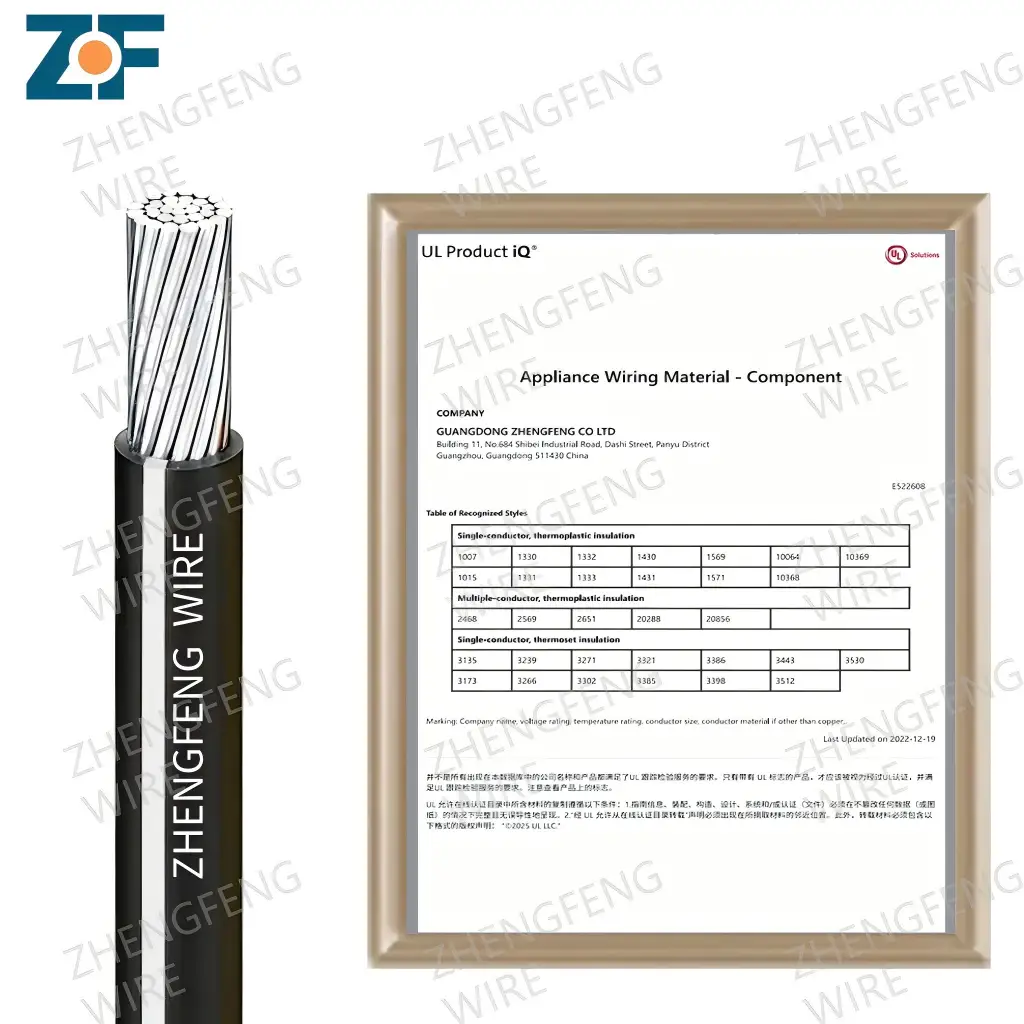
Always verify the actual certification status and applicable Style number with the manufacturer.For instance, Zhengfeng Wire's UL file number (E522608) can be verified on the official UL website.
Copper is widely used because of its high electrical conductivity.
Tinned copper can provide additional benefits in certain applications, particularly where corrosion resistance or solderability is important.
The conductor construction may include:
The choice depends on electrical, mechanical, environmental, and manufacturing requirements.
Before purchasing electronic wire, engineers and buyers can review the following checklist:
6.4 Compliance requirements
Answering these questions before purchasing can significantly reduce the risk of selecting an unsuitable wire.
Choosing an unsuitable electronic wire can create problems during production or operation.
If the conductor is too small for the application, resistance can increase and cause excessive voltage drop.
This can affect equipment performance, particularly in circuits carrying significant current over longer conductor lengths.
A wire that is not appropriately sized or rated for the application may operate at an excessive temperature.
This is why conductor size, current, installation conditions, and temperature rating must be considered together.
Using insulation that cannot withstand the surrounding temperature, chemicals, abrasion, or mechanical conditions can lead to premature insulation deterioration.
7.4 Poor Flexibility
A wire that is too rigid for a moving application may be difficult to install and may experience mechanical stress during operation.
7.5 Certification Problems
A wire may meet basic electrical requirements but still fail to satisfy the certification requirements of the finished equipment.
For regulated equipment, engineers should verify the required wire construction before production begins.
OEM manufacturers often require more than an off-the-shelf wire specification.
Depending on the project, a manufacturer may need:
For this reason, working directly with an experienced electronic wire manufacturer can simplify product selection and customization.
A manufacturer with multiple insulation technologies can also help engineers compare PVC, silicone, fluoropolymer, and crosslinked wire constructions according to the application.
When sourcing electronic wire, buyers should evaluate more than price.
Important factors include:
A manufacturer with multiple wire categories can provide more options when the project requires different temperature ratings, insulation materials, or conductor sizes.
Check whether the supplier can provide the certifications and documentation required for the target market.
9.3 Production Capacity
For OEM projects, stable production capacity is important for maintaining consistent supply.
9.4 Quality Management
A documented quality management system can help establish consistent manufacturing and inspection processes.
9.5 Customization
If the project requires custom colors, printing, conductor construction, packaging, or other specifications, confirm the supplier's customization capability before placing an order.
Technical communication is particularly important when the buyer needs help selecting between different UL Styles or insulation materials.
Electronic wire and hook-up wire overlap significantly, but the terms are not always identical.
"Electronic wire" is a broad application-oriented term covering wires used in electronic and electrical equipment.
"Hook-up wire" generally refers to insulated single-conductor wire used for internal electrical connections.
A hook-up wire can therefore be considered a type of electronic wire when used in electronic equipment.
However, purchasing decisions should ultimately be based on the actual technical specification, certification, and intended application rather than the general product name.
Electronic wire is an insulated conductor used to transmit electrical power or signals within electronic equipment, appliances, control systems, electrical assemblies, and other equipment.
Electronic wire is commonly used in electronic equipment, household appliances, lighting, battery systems, motors, control panels, electrical assemblies, and wiring harnesses.
Electronic wire usually refers to an individual insulated conductor, while a cable generally contains two or more conductors assembled together. The exact terminology can vary by industry and product construction.
Common insulation materials include PVC, silicone, FEP and other fluoropolymers, crosslinked PVC, and crosslinked PE.
Neither is universally better. Silicone wire is often selected when flexibility or higher-temperature performance is important, while PVC is widely used for general-purpose applications where its performance and cost characteristics are suitable.
Consider current, voltage, wire length, allowable voltage drop, installation temperature, conductor construction, and the requirements of the applicable standard.
AWG stands for American Wire Gauge. It is a standardized system used to identify conductor size. A smaller AWG number generally represents a larger conductor.
UL hook-up wire is an insulated wire manufactured according to a specific UL-recognized construction or Style. Different UL Styles have different electrical, thermal, insulation, and application requirements.
Some electronic wires are specifically designed for high-temperature environments. Silicone and fluoropolymer-insulated wires are examples of materials commonly used when higher temperature performance is required, but the exact rating must be confirmed from the product specification.
Yes. Depending on the manufacturer, electronic wire can be customized in areas such as conductor size, insulation color, printing, packaging, conductor construction, and other production requirements.
Q11. What certifications should I look for when buying electronic wire?
The required certifications depend on the target market and application. Common requirements may include UL, cUL, PSE, RoHS, and REACH compliance. Always verify the exact requirements for the finished product.
Start by identifying the voltage, current, temperature, flexibility, environmental conditions, conductor size, certification requirements, and installation method. Then select a wire construction that meets those requirements and verify the manufacturer's technical datasheet.
Electronic wire is a fundamental component of modern electrical and electronic equipment. From PVC hook-up wire used in control boards to flexible silicone wire used in battery systems and fluoropolymer-insulated wire used in high-temperature equipment, different wire constructions are designed to solve different engineering requirements.
The most important selection factors include conductor size, voltage rating, temperature rating, insulation material, flexibility, environmental resistance, certification, and application requirements.
For OEM manufacturers, equipment builders, wire harness companies, and electrical component purchasers, selecting the correct wire at the beginning of a project can help improve product reliability, simplify assembly, and support compliance with applicable standards.
Guangdong Zhengfeng Wire & Cable Co., Ltd. provides a range of electronic and equipment wiring solutions, including PVC electronic wire, silicone wire, Teflon/FEP wire, irradiated crosslinked wire, UL hook-up wire, and power cord products.
If you are developing a new electrical product or looking for a replacement wire, provide your required AWG, voltage, temperature, insulation material, certification, application, and quantity. The Zhengfeng team can help evaluate a suitable wire construction for your project.
Guangdong Zhengfeng Wire&Cable Co., Ltd.
Tel/WhatsApp/Wechat: +86 13829292517
Tel/WhatsApp/Wechat: +86 14749307879
Email: manager01@wire-cablemanufacturer.com
Website: www.wire-cablemanufacturer.com


Products
Navigation
QR Code


Copyright © 2026 Guangdong Zhengfeng Wire&Cable Technology Co., Ltd.