 Zhengfeng
 Oct 16,2026

Content
2.Why Is Low Smoke Zero Halogen Wire Important?
3.LSZH vs. PVC Cable: What Is the Difference?
5.Halogen-Free vs. LSZH: Are They the Same?
6.Does VW-1 Mean a Wire Is Halogen-Free?
7.Is RoHS the Same as Halogen-Free?
8.What Is Irradiated Cross-Linked Wire?
9.Why Combine Irradiation Cross-Linking with Halogen-Free Materials?
10.What Standards Are Related to LSZH Cable?
11.Recommended Irradiated Cross-Linked Wire: UL3266 and UL3173
12.How to Choose the Right LSZH or Irradiated Wire
13.Guangdong Zhengfeng Wire & Cable: UL and Irradiated Cross-Linked Wire Solutions
14.Frequently Asked Questions About LSZH and Irradiated Wire
As electrical and electronic equipment becomes increasingly focused on safety, reliability, and environmental requirements, cable material selection has become more important than ever.
Traditional PVC wire remains widely used because of its good electrical properties, flexibility, and cost effectiveness. However, PVC inherently contains chlorine, and halogen-containing materials can generate corrosive gases during combustion.
This is one reason why Low Smoke Zero Halogen (LSZH) wire has become an important option for applications where smoke generation and halogen-related emissions are a concern.
But what exactly does LSZH mean?
Is XLPE wire automatically halogen-free? Does a VW-1 flame rating mean a wire is LSZH? And what is the difference between ordinary XLPE wire and irradiated cross-linked XLPE wire?
In this guide, we explain the key differences and introduce two commonly used cross-linked wire styles: UL3266 and UL3173.
LSZH stands for Low Smoke Zero Halogen.
You may also see the abbreviation LSHF, meaning Low Smoke Halogen Free.
The term describes two different performance characteristics:
Low Smoke – refers to the amount of smoke generated by a cable under specified combustion test conditions.
Halogen Free – refers to requirements concerning halogens in combustible cable components.
Halogens include elements such as fluorine (F), chlorine (Cl), bromine (Br), and iodine (I).
Therefore, LSZH is not simply the name of an insulation material. It describes cable performance requirements related to smoke and halogens.
When cables are exposed to fire, flame propagation is not the only concern.
Smoke can reduce visibility, while gases generated by burning cable materials can affect people, electronic equipment, and surrounding infrastructure.
LSZH cables are designed to reduce smoke generation and halogen-related emissions under specified test conditions.
This makes LSZH wire particularly valuable for applications where fire safety, equipment protection, or environmental requirements are important.
Typical applications may include:
The appropriate cable should always be selected according to the requirements of the final equipment and application.
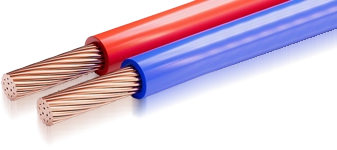
PVC and LSZH are commonly compared when selecting cable insulation.
PVC inherently contains chlorine. Depending on the formulation and cable construction, PVC cables can generate smoke and corrosive gases during combustion.
LSZH cables, on the other hand, are designed to meet specified requirements for reduced smoke generation and halogen-related performance.
PVC wire generally offers good flexibility, mature processing technology, and competitive cost, making it widely used for general electrical and electronic wiring.
LSZH wire is particularly useful when low-smoke and halogen-free performance is required.
Therefore, neither material should simply be considered better for every application. The correct choice depends on the requirements of the final product.
No.This is one of the most common misunderstandings when purchasing wire.
XLPE stands for Cross-Linked Polyethylene.
LSZH stands for Low Smoke Zero Halogen.
They describe different characteristics.
XLPE primarily tells you about the insulation material and its cross-linked polymer structure.
LSZH tells you about low-smoke and halogen-free performance.
Polyethylene does not contain halogens in its basic polymer structure, making PE-based materials suitable for developing halogen-free insulation compounds.
However, a finished XLPE insulation system may also contain flame-retardant additives, color masterbatch, stabilizers, fillers, processing additives, and other ingredients.
Therefore: XLPE does not automatically mean LSZH.
If a customer specifically requires halogen-free or LSZH performance, the complete material formulation and applicable test requirements should be confirmed.
Not necessarily.
Halogen Free and Low Smoke describe two different properties.
Halogen Free (HF) focuses on halogen-related requirements.
Low Smoke (LS) focuses on smoke generated during combustion.
LSZH or LSHF combines low-smoke and halogen-free requirements.
In simple terms:
Halogen Free does not automatically mean Low Smoke.
Low Smoke does not automatically mean Halogen Free.
A cable described as LSZH should meet the applicable requirements for both characteristics.
No.VW-1 relates to flame performance, while halogen-free requirements concern the composition and/or halogen-related performance of cable materials.
For example, a PVC wire may achieve good flame-retardant performance while PVC itself still contains chlorine.
Therefore:
VW-1 does not mean Halogen Free.
Flame Retardant does not mean LSZH.
Similarly, a temperature rating such as 105°C or 125°C does not tell you whether a wire is halogen-free.
These specifications should be considered separately:
No.RoHS and halogen-free requirements are different.
RoHS restricts specified hazardous substances in electrical and electronic products.
Halogen-free requirements focus on halogens according to the applicable specification.
Therefore, a wire may be RoHS compliant but not halogen-free.
When a supplier describes a product simply as an "environmentally friendly wire," buyers should ask what specific environmental standards or requirements the product actually meets.
Irradiated cross-linked wire uses high-energy radiation, commonly electron-beam irradiation, to promote cross-linking between polymer molecular chains.
Instead of remaining primarily as separate molecular chains, the polymer develops a more interconnected three-dimensional network.
With an appropriate material formulation and manufacturing process, irradiation cross-linking can improve properties such as:
This makes irradiated XLPE wire useful for many electrical and electronic applications requiring higher temperature resistance and reliable insulation performance.
These two technologies address different requirements.
Irradiation cross-linking is primarily used to improve the physical, thermal, and mechanical properties of polymer insulation.
Halogen-free or LSZH formulations focus on halogen and, where applicable, smoke-related performance.
When properly formulated and tested, combining these characteristics can provide wire with high temperature resistance, good electrical insulation, good mechanical performance, reduced thermal deformation, halogen-free characteristics, and low-smoke performance where specifically designed and tested.
However, one point is particularly important:
Irradiation itself does not make a wire halogen-free or LSZH.
Whether the finished product qualifies as halogen-free or LSZH depends on its material formulation, cable construction, applicable standards, and test results.
Different markets and applications may specify different standards and test methods.
IEC 60754 is commonly referenced for gases evolved during combustion of cable materials.
IEC 61034 is commonly associated with measurement of smoke density from burning cables.
UL also provides optional HF (Halogen Free) and LSHF (Low Smoke Halogen Free) evaluation and certification programs.
The important purchasing lesson is simple.
Do not ask only:"Is this wire LSZH?"
Instead ask:"Which LSZH or halogen-free standard does this wire comply with, and can you provide the corresponding test report?"
This makes supplier comparison much more reliable.
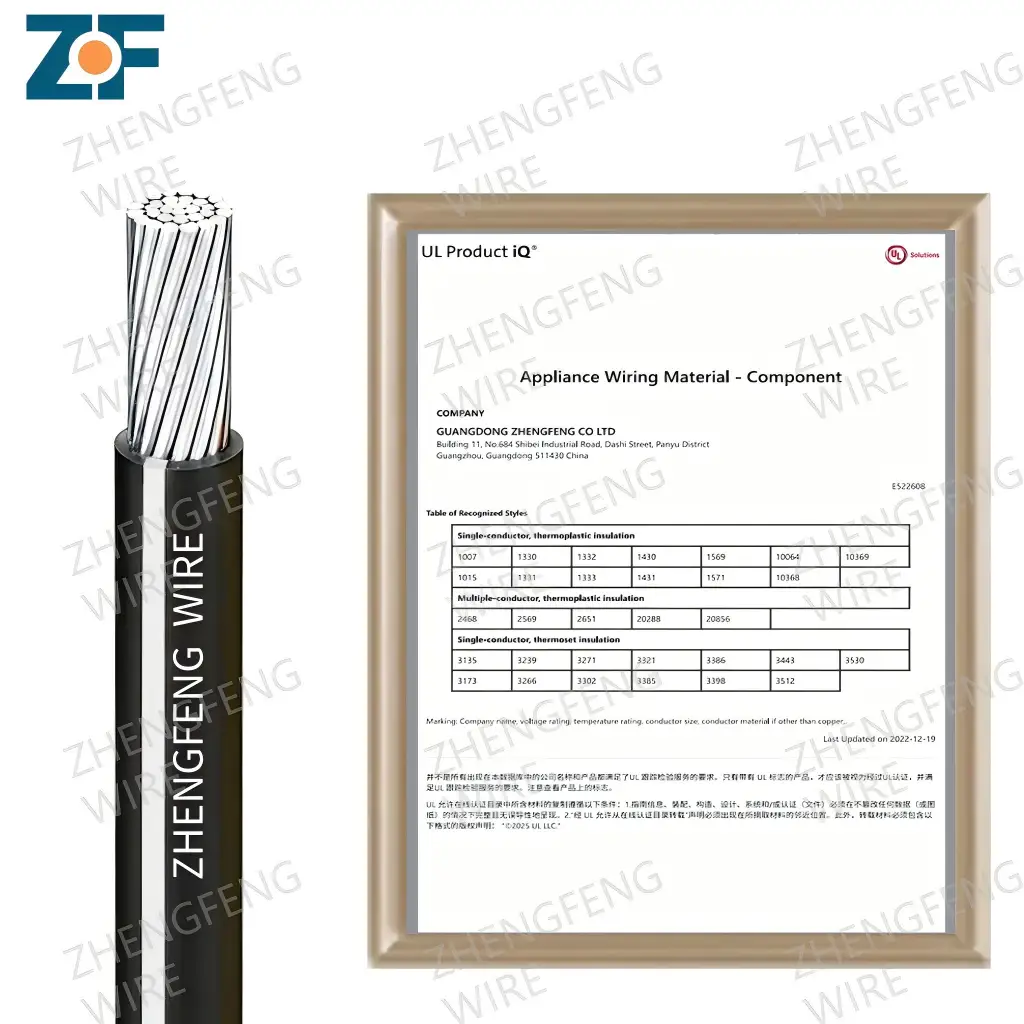
For electrical and electronic equipment requiring higher temperature resistance, UL3266 and UL3173 are two commonly used cross-linked Appliance Wiring Material (AWM) styles.
Both have a temperature rating of 125°C, but their voltage ratings and construction requirements differ.
UL3266 Irradiated XLPE Wire
UL3266 is a single-conductor AWM style commonly used for internal wiring.
Key specifications include:
When an appropriate irradiated XLPE insulation system is used, UL3266 wire can provide a combination of high-temperature resistance, electrical insulation, dimensional stability, and mechanical durability.
Typical applications may include electronic equipment, home appliances, LED lighting, power supplies, industrial control equipment, and internal wiring assemblies.
UL3173 Irradiated Cross-Linked Wire
UL3173 is another commonly used cross-linked AWM style, particularly when a higher voltage rating is required.
Key specifications include:
Its 600V rating makes UL3173 suitable for applications requiring a higher voltage rating than UL3266.
UL3266 vs. UL3173: What's the Difference?
The simplest way to remember the difference is:
UL3266 = 125°C / 300V / XLPE
UL3173 = 125°C / 600V / XL, XLPO or XLPE
Both are cross-linked AWM styles, but the correct wire should always be selected according to the complete electrical and mechanical requirements of the application.
Are UL3266 and UL3173 Automatically LSZH?
No.The UL Style number itself does not automatically mean that the finished wire is LSZH.
Remember:
UL3266 / UL3173 = UL AWM Style
XLPE / XLPO = Insulation material
125°C = Temperature rating
300V / 600V = Voltage rating
Flame test = Flame performance
Halogen Free = Halogen-related requirement
Low Smoke = Smoke-performance requirement
If LSZH performance is required, it should be specified separately and supported by the applicable material and finished-wire test requirements.
When requesting a quotation, buyers should provide more than simply "I need an LSZH wire."
A complete inquiry should ideally include:
For example:
"UL3266, 18AWG, stranded tinned copper, irradiated XLPE insulation, 125°C, 300V, black, halogen-free requirement, RoHS compliant."
Providing detailed requirements helps the manufacturer determine whether the requested construction and environmental performance can be achieved.
Guangdong Zhengfeng Wire & Cable Co., Ltd. specializes in wire and cable solutions for electrical and electronic applications.
Our product range includes PVC wire, silicone wire, Teflon wire, cross-linked irradiated wire, flexible cable, and UL appliance wiring solutions.
For customers looking for high-temperature cross-linked wire, Zhengfeng offers irradiated cross-linked wire solutions, including UL3266 and UL3173, according to the required product specifications.
UL3266 – 125°C / 300V
UL3266 is a practical option for customers requiring compact, heat-resistant XLPE internal wiring with a 300V rating.
UL3173 – 125°C / 600V
For applications requiring a higher 600V rating, UL3173 provides another cross-linked insulation option for appliance internal wiring.
Depending on your project requirements, our team can help evaluate conductor size and stranding, bare or tinned copper, insulation material, irradiation cross-linking, temperature and voltage requirements, flame performance, halogen-free requirements, environmental compliance, color, dimensions, and packaging requirements.
If your project specifically requires halogen-free or low-smoke halogen-free performance, please include this requirement in your inquiry so that the appropriate material formulation and testing requirements can be confirmed.
Looking for UL3266, UL3173, or custom irradiated cross-linked wire?
Contact Guangdong Zhengfeng Wire & Cable with your technical specifications for a suitable wire solution.
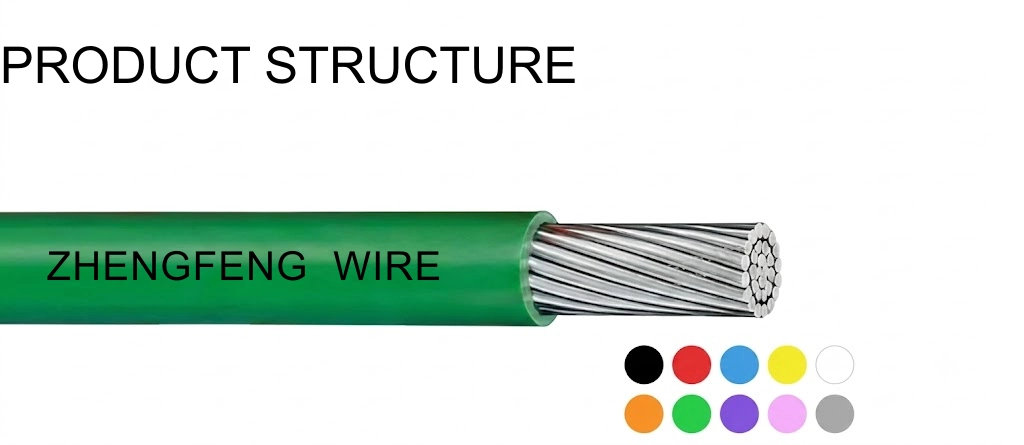
LSZH stands for Low Smoke Zero Halogen. It refers to cable designed to meet specified requirements for low smoke generation and halogen-related performance.
No. Halogen-free focuses on halogen requirements, while LSZH also includes low-smoke performance.
No. Although polyethylene itself does not contain halogens in its basic polymer structure, the complete insulation formulation contains other components. The finished product should be verified against the applicable halogen-free requirements.
No. XLPE describes a cross-linked polyethylene insulation material, while LSZH describes low-smoke and halogen-free performance.
Q5.Does VW-1 mean that a wire is halogen-free?
No. VW-1 relates to flame performance. It does not prove that a wire is halogen-free or LSZH.
Q6.Is RoHS-compliant wire also halogen-free?
Not necessarily. RoHS and halogen-free requirements address different substances and should be verified separately.
Irradiated XLPE wire uses radiation, commonly electron-beam irradiation, to cross-link the polymer insulation. This can improve heat resistance, dimensional stability, and mechanical performance.
Not automatically. UL3266 specifies an XLPE-insulated AWM construction rated 125°C and 300V, but the Style number itself does not prove LSZH or halogen-free performance. Check the specific product formulation and test documentation.
UL3266 is rated 125°C and 300V with XLPE insulation.
UL3173 is rated 125°C and 600V and permits XL, XLPO, or XLPE insulation.
The most obvious difference for buyers is the voltage rating: 300V versus 600V.
Do not rely only on descriptions such as "XLPE," "RoHS," "VW-1," "eco-friendly," or "halogen-free material."
Ask the supplier which LSZH or halogen-free standard or specification applies and request the corresponding test documentation.
Conclusion
LSZH, halogen-free, flame retardancy, XLPE, and irradiation cross-linking are related concepts, but they are not interchangeable.
The easiest way to remember them is:
XLPE = Insulation material
Irradiation cross-linking = Cross-linking process
Flame retardant = Flame performance
Halogen Free = Halogen-related performance
Low Smoke = Smoke performance
LSZH = Low-smoke + halogen-free requirements
UL3266 / UL3173 = UL AWM Styles with their own construction and rating requirements
Understanding these differences helps engineers and buyers avoid confusing material type with safety and environmental performance.
For applications requiring 125°C irradiated cross-linked wire, UL3266 and UL3173 are two options worth considering. If additional halogen-free or LSZH performance is required, these requirements should be clearly specified and verified separately.
Need help selecting UL3266, UL3173, or another irradiated wire for your application?
Contact Guangdong Zhengfeng Wire & Cable with your AWG size, voltage, temperature, insulation, environmental requirements, and application details to discuss a suitable wire solution.


Products
Navigation
QR Code


Copyright © 2026 Guangdong Zhengfeng Wire&Cable Technology Co., Ltd.