 Zhengfeng
 May 13,2026

In 2026, China's lithium battery exports continue to surge, driven by explosive demand for energy storage systems (ESS), electric vehicles, solar storage equipment, portable power stations, and AI data center backup power. According to recent industry reports, China's lithium battery exports in Q1 increased significantly year-on-year, while energy storage exports became one of the fastest-growing sectors. Europe, ASEAN, and the Middle East are now among the strongest demand regions for lithium battery products.
At the same time, the Guangdong-Hong Kong-Macao Greater Bay Area officially launched the "One-Box System" for lithium battery sea exports, helping the "New Three" industries — EVs, photovoltaics, and lithium batteries — improve global shipping efficiency and reduce logistics complexity.
Behind this booming export market lies a critical but often overlooked component: Silicone wire.
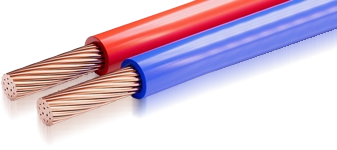
From battery modules and BMS systems to inverter connections and energy storage cabinets, silicone cable has become one of the preferred wiring solutions for modern lithium battery systems because of its excellent heat resistance, flexibility, safety, and reliability.
For lithium battery manufacturers, choosing the correct wire is no longer only about conductivity.
It directly affects: Thermal safety, Charging efficiency, Battery lifespan, Export compliance, Assembly efficiency, Long-term reliability
This article will explain:
Why lithium batteries prefer silicone wire instead of PVC wire?
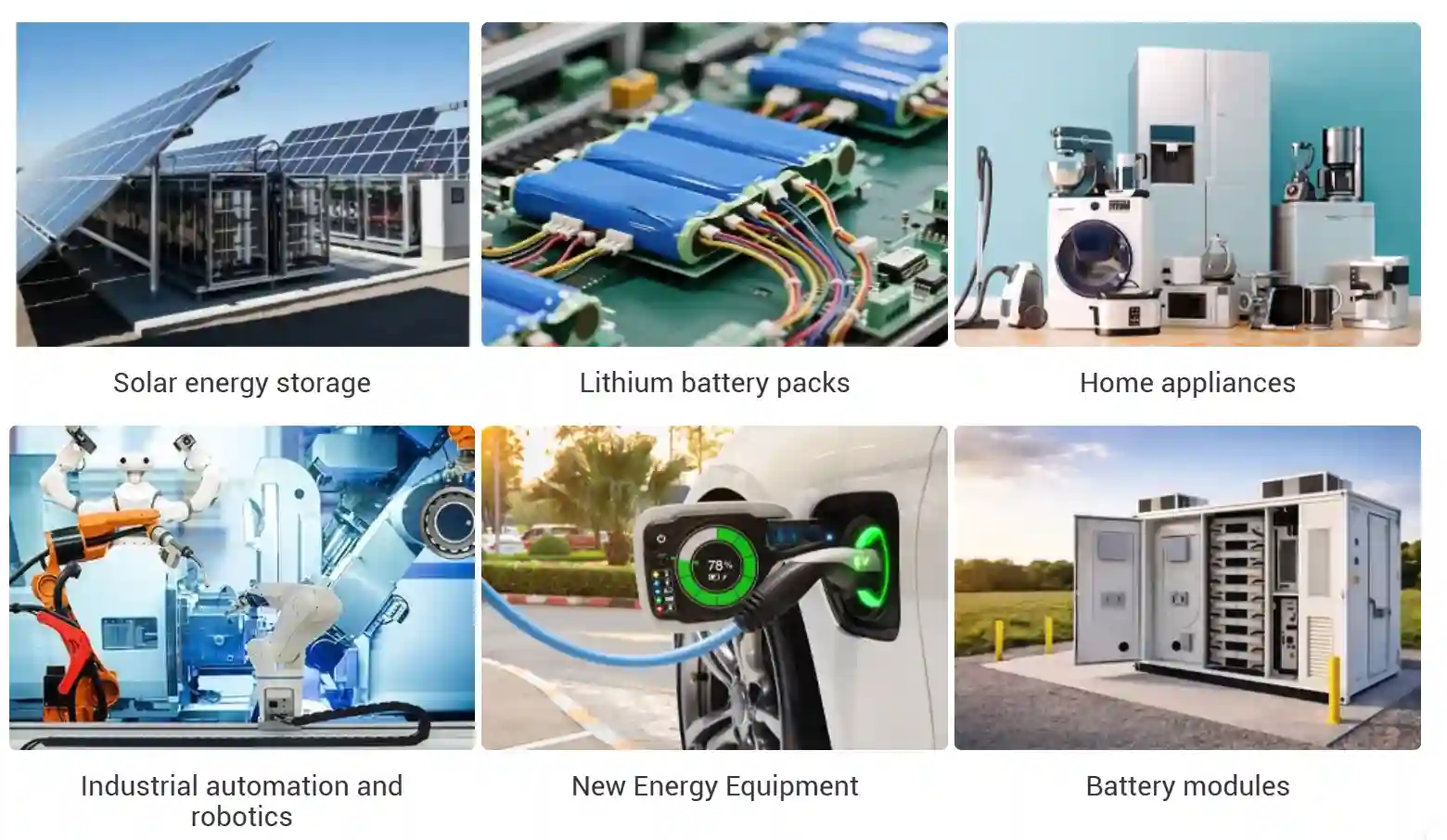
Unlike previous years dominated mainly by EV batteries, current demand is increasingly concentrated in: Residential ESS systems, Commercial and industrial energy storage, Solar + storage hybrid projects, Portable power stations, Telecom backup batteries, AI server backup power systems, Marine and RV lithium battery systems.
Industry analysis shows that energy storage batteries are becoming one of the fastest-growing export categories in China’s battery industry. Europe remains the largest overseas market, while Southeast Asia and the Middle East are experiencing accelerated growth due to renewable energy infrastructure investment.
Modern battery systems require cables that can provide:Higher current carrying capability, Better heat resistance, Lower voltage drop, Superior flexibility, Longer service life, Better flame retardancy, Stable operation under harsh environments.Traditional PVC wire is increasingly unable to meet these higher-performance requirements.This is why silicone wire is becoming the mainstream choice for lithium battery applications.
Lithium battery systems naturally generate heat during, PVC wire typically operates at: 80°C, 105°C for higher-grade PVC insulation, By comparison, silicone wire commonly supports: 150°C or 200°C.
This higher temperature resistance is critical for: ESS battery cabinets, Inverter systems, EV charging systems, Industrial battery packs
In energy storage applications, internal temperatures can rise significantly during continuous operation. Silicone insulation maintains flexibility and electrical stability under high heat, while PVC insulation may harden, deform, or crack over time.
For battery manufacturers focused on long-term reliability and export compliance, silicone wire offers a major safety advantage.
Battery pack assembly often involves:
Tight internal routing
Compact module layouts
Automated production lines
Repeated bending during installation
Silicone wire uses extremely soft silicone rubber insulation combined with fine-stranded conductors, giving it much better flexibility than PVC wire.
Benefits include:
Easier routing inside battery packs
Improved assembly efficiency
Better connector stability
Reduced installation stress
Better compatibility with automated manufacturing
This is especially important for:
Portable power stations
E-bike batteries
Drone batteries
Compact ESS systems
Mobile energy storage devices
Compared with PVC cable, silicone wire significantly reduces the risk of conductor fatigue and internal breakage caused by repeated bending.
Many lithium battery products are exported to cold-climate regions such as: Germany, Northern Europe, Canada, Northern United States. PVC insulation becomes rigid and brittle under low temperatures. Silicone wire maintains flexibility even at -60°C.
This makes silicone cable highly suitable for:
Outdoor energy storage systems
Solar storage cabinets
Marine battery systems
Telecom backup power stations
Cold-region renewable energy projects
As Europe's ESS market continues expanding rapidly, low-temperature performance has become increasingly important for lithium battery wiring.
Modern ESS systems and lithium battery packs require stable high-current transmission. Most high-quality silicone wires use:
High-purity tinned copper conductors
Fine-stranded flexible copper
Low-resistance conductor structures
Advantages include:
Lower voltage loss
Better conductivity
Reduced heat generation
Higher efficiency
Improved charging performance
For high-current applications such as:
ESS battery cabinets
Inverter connections
Fast-charging systems
Industrial battery modules
silicone wire provides better long-term stability than traditional PVC cable.
Ⅲ. Common Silicone Wire Types Used in Lithium Battery Applications
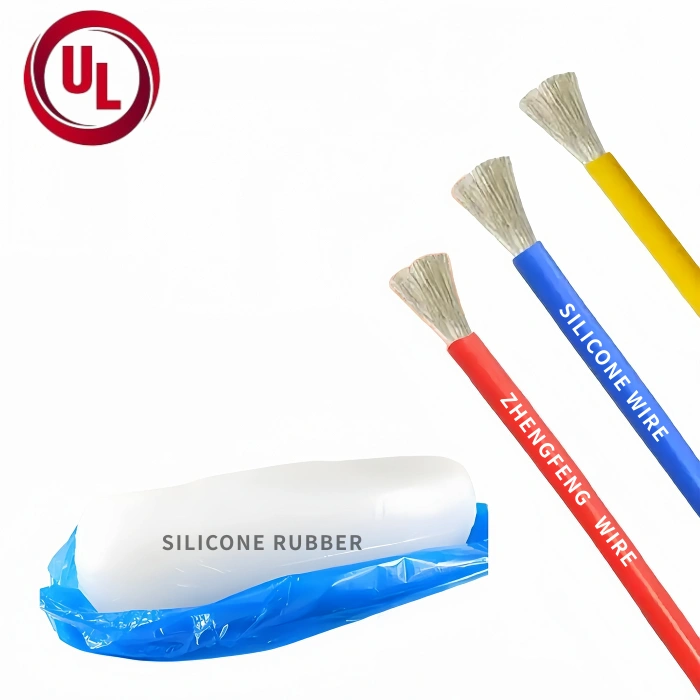
Different battery systems require different cable specifications.Below are several commonly used UL-certified silicone wire models in lithium battery manufacturing.
| UL Style | Specifications |
Applications |
Common AWG |
Remark |
| UL3135 Silicone Wire |
Rated temperature: 150°C Rated voltage: 600V Flexible tinned copper conductor Excellent aging resistance |
Battery packs BMS wiring Portable power stations Consumer lithium batteries |
18AWG 16AWG 14AWG |
UL3135 is one of the most commonly used silicone wire models for medium-current battery applications because it combines flexibility, heat resistance, and cost efficiency. |
| UL3512 Silicone Wire |
Ultra-flexible silicone insulation Excellent bending performance Strong thermal stability High current capability |
Energy storage systems High-current battery modules Solar storage equipment Portable ESS systems |
12AWG 10AWG |
UL3512 is especially suitable for applications requiring repeated movement and flexible routing. |
| UL3530 Silicone Wire |
Heavy-duty silicone insulation High-temperature resistance Large conductor compatibility Excellent current carrying capability |
ESS battery cabinets Inverter systems EV charging systems Industrial lithium battery packs |
8AWG 10AWG 12AWG 14AWG |
Among these specifications, 12AWG UL3530 silicone wire has become one of the most popular choices for energy storage systems |
Different current levels require different wire sizes.
| Current Range | Recommended AWG |
| 10A–20A | 18AWG–16AWG |
| 20A–40A | 14AWG–12AWG |
| 40A–70A | 10AWG–8AWG |
| 70A–150A | 6AWG–4AWG |
For many ESS systems and inverter applications, 12AWG silicone wire is one of the most widely used specifications.
Prefer UL-certified insulation, ensure flame-retardant compliance. For high-temperature battery systems: Choose 150°C or 200°C silicone wire
Step 3: Consider Flexibility Requirements
Applications involving movement or compact routing require ultra-flexible cable.Silicone wire performs significantly better than PVC wire under repeated bending conditions.
Examples include: Portable power stations, Robotics batteries, Mobile energy storage systems, Drones, Compact battery modules
Step 4: Verify Export Certifications
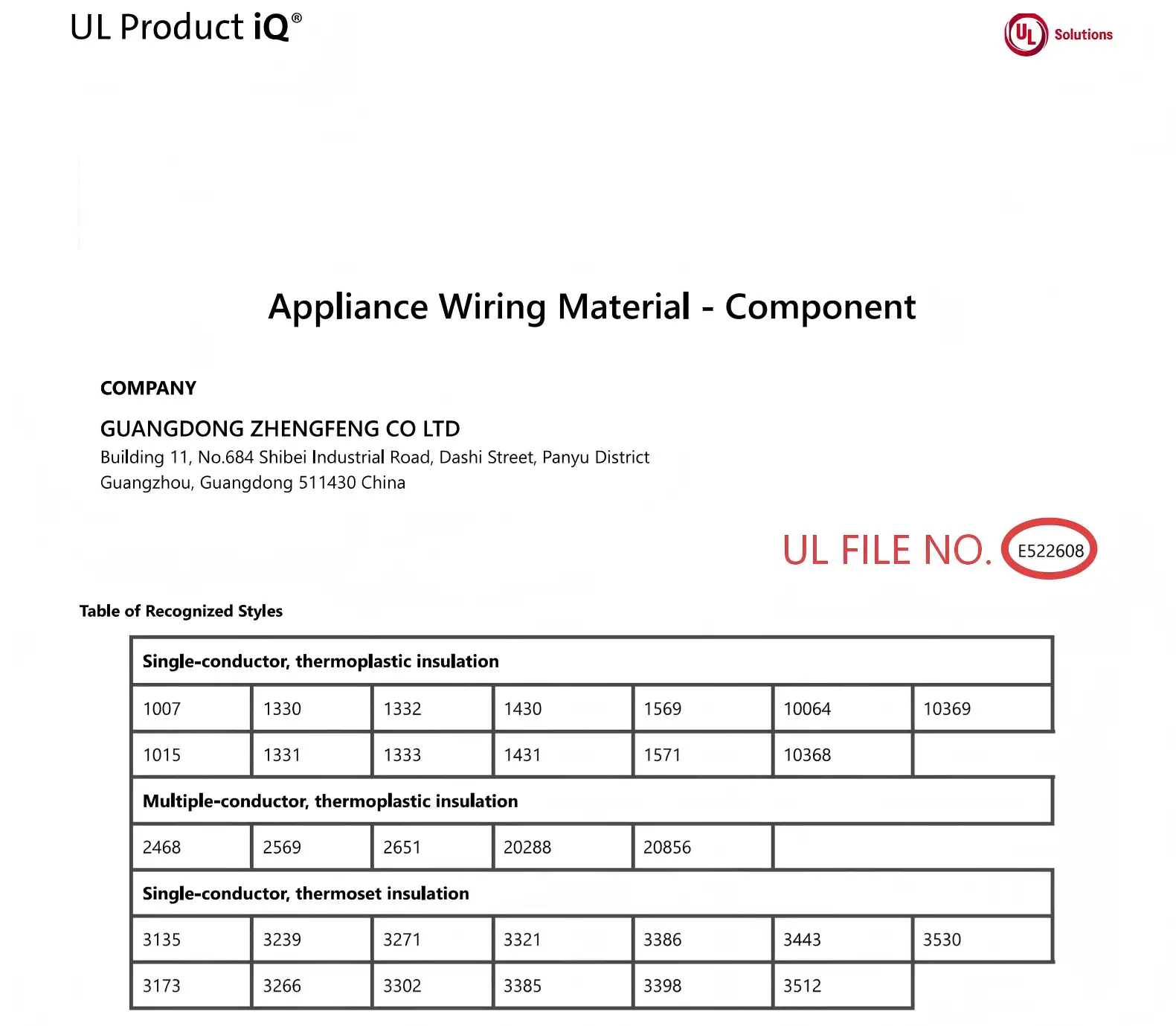
Common certifications include: UL,CUL, RoHS, REACH etc.
China has built the world's most complete lithium battery supply chain.
We have
The launch of the "One-Box System" for lithium battery exports will further improve international shipping efficiency and accelerate global battery exports from China.
As the global markets for energy storage and lithium-ion batteries experience rapid growth, the expectations of overseas clients regarding cable suppliers have evolved—shifting from a mere focus on "product supply" to a demand for "comprehensive solution capabilities."
**Guangdong Zhengfeng Wire&Cable Co., Ltd.**
With over 25 years of deep expertise in the wire and cable industry, we specialize in applications for new energy, energy storage, and lithium-ion batteries. We are dedicated to providing global clients with professional, highly stable wiring harness solutions.
Our company maintains a robust international certification system; our products have obtained certifications such as UL, RoHS, and REACH. This enables us to fully meet the export requirements for lithium-ion batteries and energy storage systems destined for markets across Europe, the Americas, Japan, and Southeast Asia.
In terms of product offerings, Zhengfeng boasts an extensive portfolio of new energy cables, including:
These products are widely applied in:
Leveraging our extensive export experience and stable production capacity, Zhengfeng is well-positioned to support OEM/ODM customization, large-scale deliveries, and the long-term partnership needs of clients worldwide.
Furthermore, the company has long specialized in UL-standard cables and possesses deep familiarity with popular new energy models—such as UL3135, UL3512, and UL3530. Based on the specific application scenarios of various lithium-ion battery systems, we provide expert support in cable selection and application, ensuring solutions that are safer, more efficient, and more professional.


Products
Navigation
QR Code


Copyright © 2026 Guangdong Zhengfeng Wire&Cable Technology Co., Ltd.